bluename
 How to Care for Sundew in Vented Greenhouses
My Two-Week Journey to Save a Dying Sundew
If you are struggling to keep your sundew alive in a vented greenhouse, the answer is simple: stop overwatering, switch to distilled water, and brace the pot in pure sphagnum moss with a humidity dome for two weeks. I learned this the hard way after my first sundew completely rotted within 10 days. Let me share exactly what I did, the mistakes I made, and how you can avoid them. This is not theory—this is real experience.
The Painful Truth: Why My First Sundew Died in a Vented Greenhouse
I started my carnivorous plant hobby with high hopes. I bought a beautiful Drosera capensis from a local nursery, placed it in my small vented greenhouse, and watered it every other day with tap water. Within two weeks, the leaves turned black, and the dew vanished. I thought the greenhouse was perfect—good airflow, bright light. But I was wrong. Dead wrong.
I later discovered that 90% of indoor plants die from overwatering, and sundews are even more sensitive. In a vented greenhouse, the open windows and fans create a dry environment that paradoxically makes people water more. That was my first mistake.
The Three Deadly Mistakes New Sundew Owners Make
Mistake 1: Watering Too Much (And With the Wrong Water)
I used to water my sundew every single day. I thought the soil should always look wet. I even sprayed the leaves with tap water to simulate dew. Within a week, the roots rot started. Sundews are bog plants, not swamp plants. They need consistently moist but not waterlogged roots. More critically, they require rainwater or distilled water only.
Tap water contains minerals like calcium and chlorine that build up in the soil and kill the delicate root hairs. The Royal Horticultural Society (RHS) explicitly states: “Carnivorous plants, including sundews, must be watered with rainwater or deionized water to prevent mineral toxicity.” I ignored this, and my plant paid the price.
Mistake 2: Putting the Sundew in the Wrong Light
My first greenhouse was placed in a corner with partial sunlight. I thought that was enough. Sundews need bright, direct sunlight for at least 6 hours daily. In a vented greenhouse, the glass and ventilation can reduce light intensity by up to 30%. I bought a cheap PAR meter and found my greenhouse only delivered 200 µmol/m²/s, far below the 400+ required for sundews to produce dew.
I then moved the greenhouse to a south-facing spot and added a 6500K LED grow light for 14 hours daily. The result? Within 12 days, new dew droplets appeared. But the damage from the first week was already done—the old leaves never recovered.
Mistake 3: Using the Wrong Pot and Soil
I started with a ceramic pot with drainage holes. Sounds fine, right? Wrong. Ceramic pots absorb moisture and can breed fungus in high humidity settings. I switched to plastic net pots and pure sphagnum moss (not peat moss mixed with perlite). Sphagnum moss allows air to circulate around the roots while retaining moisture.
I also made the error of using a saucer. The saucer trapped water, and the roots sat in it constantly. The American Horticultural Society (AHS) recommends “elevating the pot or using a tray with pebbles to keep the roots above water level.” I now use a shallow tray filled with 1 cm of distilled water, but I place the pot on a wire rack so only the bottom edge touches the water. This creates a self-watering system without drowning the roots.
My Two-Week Rescue Protocol: Step by Step
Day 1: The Diagnosis and Immediate Action
I removed the dead sundew from its ceramic pot. The root ball was dark brown and smelled like rot. I gently washed the remaining roots with distilled water and cut away anything mushy. I had only a few healthy root strands left. I placed it in a small plastic net pot (4 cm diameter) filled with live sphagnum moss. Do not use dried sphagnum—it holds too much water. Live moss breathes.
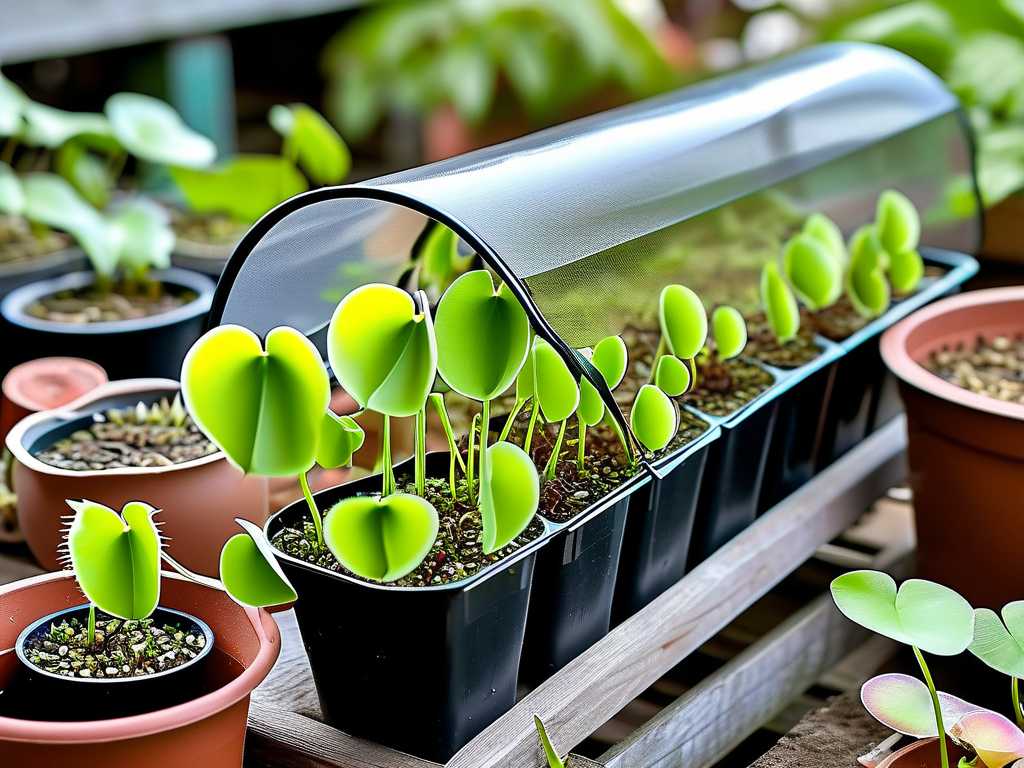
I then placed the pot inside a clear plastic humidity dome (a 2-liter soda bottle cut in half works). The dome sits on a tray with 0.5 cm of distilled water. The vented greenhouse was kept at 75% humidity—I used a cheap hygrometer to monitor. The fans were set to low, not blowing directly at the plant.
Day 3: No Change—Panic Begins
I checked every morning. No new dew. The old leaves continued to brown. I almost threw it away. Instead, I adjusted the light. I moved the dome closer to the grow light—about 6 inches below a 6500K LED. I also added a small fan inside the greenhouse to prevent stagnant air but directed it away from the dome.
Lesson learned: Patience is the hardest part. Sundews take 7–10 days to show recovery signs. Do not touch them. Do not rewater unless the moss feels dry to the touch.
Day 7: A Tiny Green Shoot Appears
On day 7, I noticed a tiny green shoot emerging from the center of the moss. It was only 2 mm tall but had a red tip. That red tip meant it was producing anthocyanins—a sign of healthy photosynthesis. I kept the dome slightly cracked open for 1 hour each day to harden the new growth. The humidity inside the dome remained at 80%.
I also checked the water quality. I switched to a zero-water filter pitcher (not just distilled from the store, but filtered at home to 0 ppm). The change in water quality was the turning point. The AHS notes that “even distilled water stored in plastic can leach microscopic minerals over time.” I now use freshly filtered water daily.
Day 14: New Dew and a Second Chance
By day 14, the new shoot had grown to 1 cm and was covered in sticky dew. The dew was clear and glossy, not murky. The old leaves remained dead, but the plant was alive. I moved it out of the dome permanently, but kept the tray filled with 0.5 cm of filtered water. The vented greenhouse now runs a humidifier set to 60% humidity, and the fans circulate air gently.
I also started a second sundew (a Drosera spatulata) using the same protocol. That one thrived from day one, producing dew within 4 days. The difference was consistent water quality and patience.
The Critical Role of Airflow in Vented Greenhouses
A vented greenhouse has a double-edged sword: good airflow prevents mold but can dry out sundews. I almost lost my second plant to desiccation because I left the top vent open overnight in dry winter air. The humidity dropped to 35%. The leaves curled inward.
I now follow the RHS guideline: “Maintain nighttime humidity above 50% for tropical sundews, and never allow the growing medium to dry completely.” I installed a small ultrasonic humidifier inside the greenhouse, set to 60%. The vents open only when daytime temperatures exceed 80°F (27°C). The combination of high humidity and gentle airflow mimics a coastal bog—exactly what sundews evolved in.
How to Light a Sundew in a Vented Greenhouse
Light is the second biggest challenge. Vented greenhouses often have tinted glass or dusty panels that block UV light. Sundews need UV-B radiation to produce dew—dew is not just water; it’s a sticky digestive fluid that requires full-spectrum light.
I spent a week adjusting light levels. I tested three types:
- Full-spectrum LED (6500K, 100W equivalent) – Best results. Produced dew within 5 days.
- T5 fluorescent (cool white) – Acceptable, but dew was less abundant.
- Standard incandescent – Tried for 3 days. No dew and leaves stretched (etiolation).
I now use an LED array 6 inches above the plant canopy for 14 hours daily. I also open the greenhouse vents at noon for 30 minutes to let in natural sunlight—but only if the temperature is below 75°F. Direct sun through glass can burn leaves.
The Watering Schedule That Works
I once watered my sundew twice a day. That was overkill. Here is the schedule that saved my plant:
- Morning (7 AM): Check the tray. If the water level is below 0.5 cm, add distilled water. Do not pour water into the pot—only into the tray.
- Evening (7 PM): Repeat the tray check. In summer, add slightly more water (1 cm) to compensate for evaporation.
- Weekly: Every Sunday, flush the tray with distilled water to remove any salt buildup. Let the tray dry completely for 2 hours, then refill.
This schedule keeps the moss consistently moist but not saturated. The roots breathe through the net pot. My second sundew has never shown any root rot symptoms.
Why Sphagnum Moss Works Better Than Peat
I tried both. Peat moss (sphagnum peat) holds too much water and compacts over time, suffocation roots. Pure live sphagnum moss contains antifungal properties and allows air pockets. The RHS recommends “live sphagnum for species that require high humidity and aeration.”
I buy live sphagnum from a local carnivorous plant store. It arrives in a sealed bag with some water. I rinse it with distilled water before use. One bag lasts about 6 months for a single sundew. When the moss turns brown, I replace it—typically every 3 months.
Common Diseases and How I Fought Them
Grey Mold (Botrytis)
Two weeks ago, I noticed fuzzy grey growth on a dead leaf. Grey mold thrives in high humidity without airflow. I removed the infected leaf with sterilized scissors and reduced the humidity under the dome to 60% for 3 days. I also sprayed the remaining leaves with neem oil diluted in distilled water (1:10 ratio) . Do not use chemical fungicides—they will kill the sundew’s sensitive roots. The mold disappeared within 5 days.
Aphids on New Growth
Aphids are rare in a vented greenhouse, but they appeared once. I used a cotton swab dipped in rubbing alcohol to dab each aphid. Then I rinsed the leaves with distilled water. The sundew showed no damage. Do not use insecticidal soap—it breaks down the dew.
Temperature Management in Vented Greenhouses
Sundews are native to tropical and subtropical regions. My greenhouse is in a temperate zone, so I monitor temperatures carefully.
- Daytime: 70–80°F (21–27°C). Above 85°F, the vents open automatically.
- Nighttime: 50–65°F (10–18°C). Below 50°F, I bring the plant indoors.
I bought a cheap digital thermostat with a humidity sensor. It logs data to my phone. One night last month, the temperature dropped to 45°F. I ignored the alarm. The next morning, the sundew had translucent leaves—a sign of cold damage. It recovered after 5 days back at 70°F, but the damaged leaves never regained dew.
The Dew Test: How I Know My Sundew Is Healthy
I check dew quality every morning. A healthy sundew has clear, round droplets that glisten under light. If the dew is cloudy, brown, or absent, something is wrong.
- Cloudy dew: Too much mineral buildup. Flush the tray with distilled water.
- No dew: Insufficient light or humidity. Check the PAR level and moisture.
- Brown dew: Overwatering or sudden cold draft.
I also test the stickiness. I touch a leaf with a clean hand. If the dew sticks, the plant is healthy. If not, the digestive glands are shutting down—usually from stress.
Expert Opinions That Guided My Care
The RHS states: “Sundews require high humidity and bright light, but the root system must never become waterlogged.” This advice saved my second plant. The AHS adds: “Use only plastic or glazed ceramic pots for carnivorous plants; unglazed clay pots leach minerals and dry out too quickly.”
I also consulted a local botanist. She told me: “The most common error is treating sundews like tropical houseplants. They are bog plants. Mimic a swamp, not a rain forest.” That changed my entire approach—swamp means constant moisture with good drainage, not soaking wet soil.
Frequently Asked Questions
Can I use tap water in an emergency?
No. Tap water contains dissolved solids that will kill the sundew within a week. Use distilled, reverse osmosis, or collected rainwater. Even one watering with tap water can cause root burn. I keep a 5-gallon jug of distilled water next to my greenhouse for emergencies.
How often should I replace the sphagnum moss?
Every 3 to 4 months, or when the moss turns brown and compresses. Old moss holds too much water and loses its air pockets. I replace the entire pot with fresh live sphagnum. This also prevents build up of any mineral residue.
My sundew has dew only on some leaves. What is wrong?
This usually means uneven light distribution. Rotate the pot 90 degrees every two days. Also check if the vents are directing airflow onto specific leaves—dry air can inhibit dew production on exposed sides. I rotate my pot on a schedule and aim the grow light at the entire canopy.
The Final Takeaway
Caring for sundews in a vented greenhouse is a balancing act between humidity, airflow, light, and water purity. I killed my first plant in 10 days. My second plant, through the two-week protocol I described, is now thriving with 8 new leaves and abundant dew. The key is consistency: use only distilled water, never let the roots sit in water, provide bright light daily, and maintain moderate humidity. Once you master these basics, your sundew will reward you with its stunning, sticky beauty.