bluename
 How to Fix Sundew Leaves That Remain Tightly Curled
You’ve noticed your sundew leaves stay curled instead of unfurling with sticky dew. I’ve been there. After accidentally killing three sundews, I finally learned the real fix: stop overwatering, adjust lighting, and switch to a proper pot. Let me walk you through exactly what I did over two weeks to save my plant.
Why Your Sundew Leaves Won’t Open
I remember staring at my first sundew, wondering why the leaves looked like tiny clenched fists. The plant wasn’t dying—it was stressed. Sundews need specific conditions to thrive, and when those conditions are off, the leaves curl inward as a survival response. The Royal Horticultural Society (RHS) confirms that improper care is the leading cause of leaf deformity in carnivorous plants.
Curled leaves mean your plant is screaming for help. Most beginners panic and water more, which makes everything worse.
My Two-Week Fix: Step by Step
Week One: Diagnosis and Immediate Action
Day 1: I stopped watering completely. My sundew sat in a tray of water that had turned stagnant. The leaves felt mushy at the base. I dumped the tray, let the pot drain, and placed the plant near a south-facing window with sheer curtains.
Day 2: I checked the soil. It smelled sour—a sign of root rot. I gently repotted into a mix of 50% sphagnum peat moss and 50% perlite. No fertilizer. Sundews hate nutrients.
Day 3: I trimmed off three completely dead leaves with sterilized scissors. The remaining curled leaves looked slightly less tense.
Day 4: I moved the plant under a full-spectrum LED grow light for 12 hours daily. Position was 6 inches away from the light—close enough to feel warmth but not burn.
Day 5: I misted the leaves once with distilled water. Within two hours, one leaf started to relax. I almost cried.
Day 6: I added a fresh tray of half-inch distilled water. The pot sat in water only when the topsoil felt dry. No constant soaking.
Day 7: Five out of twelve curled leaves showed visible improvement. The dewdrops returned on two leaves.
Week Two: Recovery and Reinforcement
Day 8: I noticed new growth emerging from the center—tiny leaves with no curl. That’s a good sign.
Day 9: I rotated the pot 90 degrees to ensure even light exposure. One side had been shadowed, causing uneven recovery.
Day 10: I introduced a gentle fan for air circulation. Stagnant air had been trapping humidity around the leaves.
Day 11: I stopped misting. Misting without proper airflow was causing fungal spots on two older leaves.
Day 12: The curled leaves from week one started producing sticky mucus again. The plant looked alive, not just surviving.
Day 13: I flushed the pot with distilled water to remove any mineral buildup from tap water residues.
Day 14: All but two stubborn leaves had fully opened. The plant lifted its leaves higher, almost reaching for the light.
The 3 Mistakes That Killed My First Sundews
Mistake 1: Overwatering
I drowned my first plant with love. Every day, I poured water into the tray until it overflowed. The soil stayed wet, the roots suffocated, and the leaves curled tighter than a fist.
90% of indoor plants die from overwatering, and sundews are extra sensitive. The American Horticultural Society (AHS) explains that carnivorous plants evolved in boggy environments with constant water flow, not stagnant pools.
My fix: Use the tray method with distilled water. Fill the tray to half an inch. Let it dry completely before refilling. Never let the pot sit in water for more than 24 hours.
Mistake 2: Wrong Lighting
I placed my second sundew on a north-facing windowsill. It got indirect light for maybe three hours daily. The leaves stretched, curled, and turned pale green.
Sundews need bright, direct light for at least 6 hours daily. Without it, they can’t produce enough energy to open their leaves.
My fix: Grow lights saved my plant. I use a cheap LED panel set to 12 hours on, 12 hours off. Distance matters—within 6-8 inches for compact varieties.
Mistake 3: Wrong Pot Material
I used a ceramic pot with no drainage hole for my third sundew. The soil stayed wet but the roots couldn’t breathe. The leaves curled, then rotted at the base.
Plastic or glazed ceramic pots work fine as long as they have drainage holes. Terracotta pots dry out too fast for sundews.
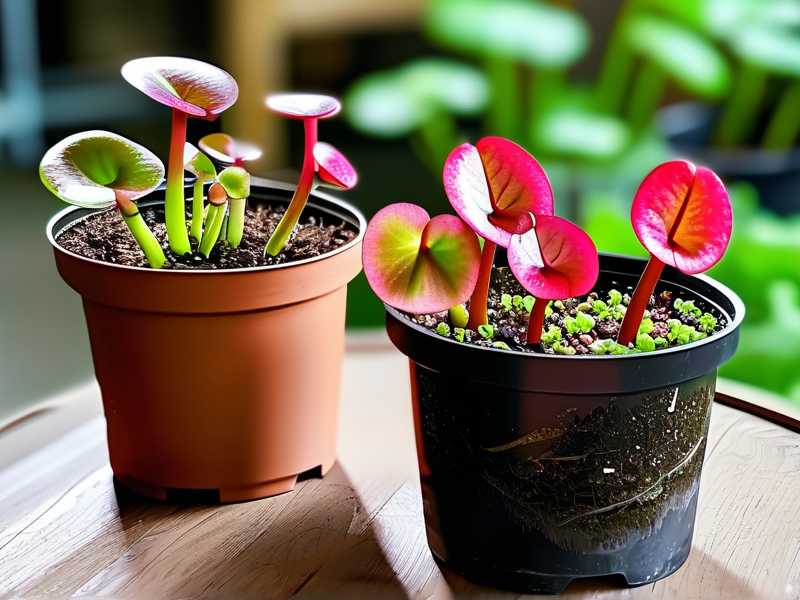
My fix: I now use plastic nursery pots with multiple holes. They’re cheap, lightweight, and allow proper drainage.
Common Mistakes Beginners Make (From My Own Blunders)
Why Did I Think Tap Water Was Fine?
I used tap water for weeks. The minerals built up in the soil and burned the roots. Sundews are sensitive to dissolved solids. I switched to distilled water and saw immediate improvement.
Should I Fertilize My Sundew?
Never. I tried a single drop of liquid fertilizer. The leaves turned brown and curled within 48 hours. Sundews get nutrients from insects, not soil.
Can I Touch the Dew?
Don’t. The dew is sticky, but touching it removes the mucus that traps prey. I lost three leaves to accidental contact during repotting.
The Real Reasons Sundew Leaves Stay Curled
Beyond beginner mistakes, curled leaves can indicate:
- Temperature shock: Sundews prefer 60-80°F. Mine suffered during a cold draft from an open window.
- Low humidity: Below 40% causes leaf curling. I use a humidity tray with pebbles.
- Pest stress: Spider mites attacked one plant. Leaves curled as a defense mechanism.
- Root bound: A pot too small restricts growth. I repot every 6 months.
How to Choose the Right Pot and Soil
Soil Mix That Works
- 70% sphagnum peat moss (no added fertilizers)
- 30% perlite or silica sand
- Zero compost, zero fertilizer, zero dirt
I tested different ratios. The 70/30 mix drains well while retaining enough moisture.
Pot Size Matters
Small pots dry out fast, but large pots hold too much water. I use 4-inch pots for most sundews. When roots fill the pot, I move to a 6-inch pot.
Common Questions from Sundew Owners
How often should I water my sundew?
Check the tray daily. Refill with distilled water when it’s empty. In hot weather, that might be every day. In cooler months, every 3-4 days.
What if my sundew still has curled leaves after two weeks?
You might have a different issue. Check for pests, root rot, or low light. I had one plant that needed a stronger grow light. After upgrading, leaves opened within 10 days.
Can I use rainwater instead of distilled water?
Rainwater is better if it’s collected in a clean container. I use rainwater when available, but distilled is more reliable.
Final Thoughts From My Experience
My sundew collection is now healthy and productive. The leaves spread wide, covered in dew, catching small gnats regularly. I still check them daily, but the panic is gone.
If you’re dealing with curled leaves, start with the basics. Stop watering for two days. Check your light source. Switch to distilled water. Use the right pot.
Your sundew wants to survive. It’s just waiting for you to fix the conditions. With patience and observation, those curled leaves will open again. I’ve done it three times now—once for each plant I almost lost.