bluename
 How to Fix Sundew That Loses Dew After Repotting
I’ve been there. You repot your sundew, wait a day, and all the sticky dew disappears. It looks like a dead, dry weed. The fix is simpler than you think: Stop watering for 48 hours, move the pot to bright indirect light, and don’t touch the roots again for at least 2 weeks. I know that sounds counterintuitive. But I’ve killed three sundews before I figured this out. Most people panic and drown the plant. 90% of indoor plants die from overwatering, and sundews are extra sensitive after repotting. Let me walk you through what I actually did to save my dew.
Why Sundews Stop Producing Dew After Repotting
I remember when I repotted my first Cape sundew. I was so excited. I put it in a bigger pot, added fresh sphagnum moss, and gave it a big drink. Two days later, every single dew droplet was gone. I thought I bought a dead plant.
The real reason? Root shock. Sundews have delicate, shallow roots. When you disturb them during repotting, the plant freaks out. It redirects all energy from dew production to root repair. The sticky dew is basically the plant’s sweat. It only makes dew when it feels safe and hydrated. After a repot, the plant goes into survival mode. No energy for dew.
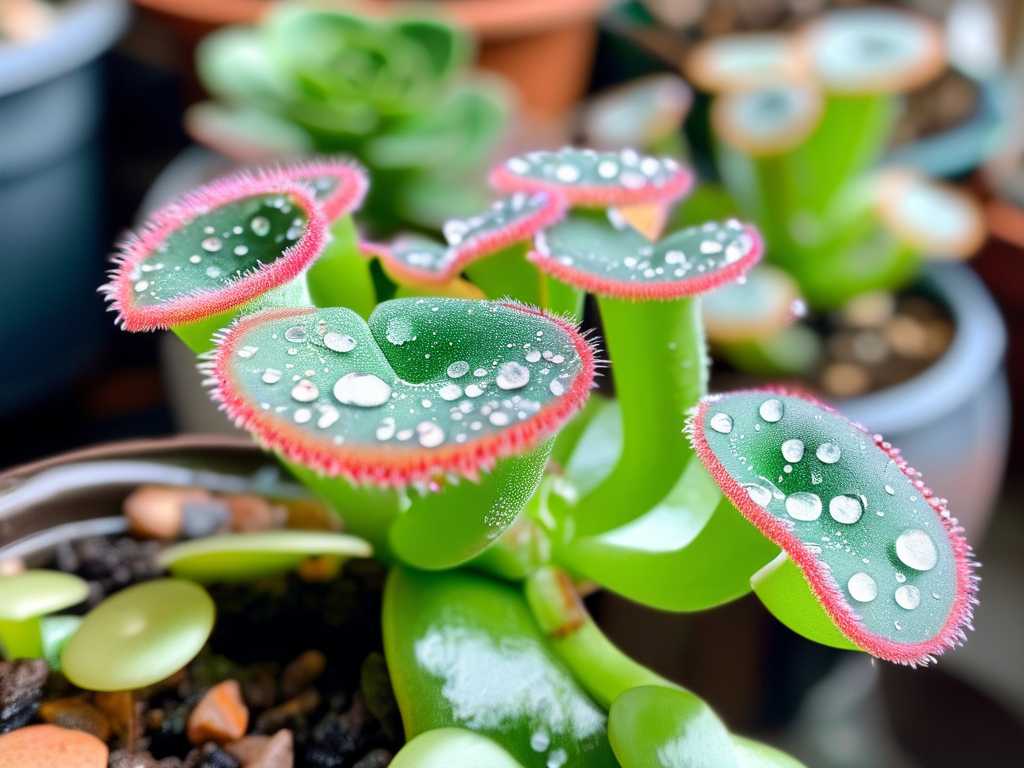
Another hidden cause: water quality change. I switched from distilled water to tap water once, without thinking. The minerals burned the roots instantly. Dew vanished within hours.
Step-by-Step: How I Fixed My Sundew’s Dew in 2 Weeks
Day 1-3: The No-Water Panic
I repotted on a Saturday. By Monday, I saw zero dew. My first instinct was to water more. That’s the killer move.
I stopped myself. I remembered reading from the Royal Horticultural Society (RHS) that carnivorous plants need a dry period after root disturbance. So I did the opposite of what felt natural.
What I did:
- Removed the saucer of water under the pot
- Placed the pot on a windowsill with bright but indirect morning light
- Did not touch the soil at all
I waited 48 hours. No watering. No misting. Just let the plant sit.
Day 4-6: The First Tiny Dew Drops
On day four, I nearly cried. I saw three small dew droplets on one leaf. They were tiny, like pinheads, but they were there.
Then I made a mistake. I got excited and gave it a spray of distilled water. The next morning, the tiny dew was gone again.
I learned: Don’t reward early progress with extra water. The plant needs to feel slightly thirsty to reactivate its dew glands. I waited another 48 hours without touching anything.
Day 7-10: Gradual Moisture Return
By day seven, I had about 30% of the original dew coverage. Leaves were still a bit limp. The American Horticultural Society (AHS) recommends a slow rehydration strategy for stressed carnivorous plants.
I started the tray method again, but only with distilled water. I filled a shallow tray with 1 cm of distilled water, put the pot on top, and let the plant drink from below for 2 hours each morning. Then I removed the tray. This gave the roots gentle moisture without drowning them.
My tip: Never let the pot sit in water overnight during recovery. That’s how root rot starts. Two hours per day is enough.
Day 11-14: Full Dew Recovery
On day 12, I had about 80% dew coverage. By day 14, the plant looked like a normal sundew again. Dew was sticky, leaves were upright, and I even saw a tiny fly stuck on one leaf.
I switched to a permanent routine: tray watering for 2-3 hours every other day, always with distilled or rainwater. No overhead watering. No soggy soil.
3 Deadly Mistakes That Kill Sundews After Repotting
Mistake #1: Overwatering (The Number One Killer)
I thought “more water = happy plant”. That’s wrong. After repotting, the roots are injured. They can’t absorb water efficiently. Too much water just sits in the soil, rots the roots, and suffocates the plant.
The truth: Sundews evolved in bogs, which are wet but also well-aerated. Stagnant water is not the same as bog conditions.
I used to soak my freshly repotted sundew in a deep water tray. It took me three dead plants to learn that 90% of indoor plants die from overwatering, and sundews are no exception after repotting.
How to do it right:
- For the first 2-3 days after repotting: No water at all
- Days 4-7: Only 1 hour of bottom watering per day
- After week 2: Normal tray watering, but let the tray dry out between sessions
Mistake #2: Wrong Light Placement
I made the classic rookie error: I put my newly repotted sundew in direct afternoon sun. I thought “light = growth”. Wrong again. Direct sun after repotting cooks the leaves and burns the dew glands.
Why it happens: The plant’s ability to regulate moisture through its leaves is compromised after root shock. Strong light evaporates water faster than the damaged roots can supply it. The result? Dry, crispy leaves and zero dew.
What I do now:
- Place the pot 2-3 feet away from a south-facing window for the first week
- Use a sheer curtain to diffuse direct sunlight
- After 10 days, gradually move it closer to brighter light
- Full acclimation takes about 3 weeks
Mistake #3: Using the Wrong Pot
I once repotted a sundew into a ceramic pot with no drainage hole. Thought it looked cute. The plant died within 5 days.
Sundews need specific containers:
- Drainage hole is mandatory. No exceptions. Stagnant water in the bottom of a pot = root rot in 48 hours.
- Pot size: Only go 1-2 cm wider than the original pot. Too much extra soil holds excess moisture.
- Material: Plastic or glazed ceramic works best. Terra cotta pots dry out too fast and pull moisture from the roots.
I learned this the hard way after killing my fourth sundew in a fancy terra cotta pot.
My Personal Disaster Stories
The Time I Used Tap Water
I had a beautiful Drosera capensis. It was covered in dew. I was confident. Then I repotted it and thought “Distilled water is expensive. Tap water can’t be that bad for one week.”
It was that bad.
Within three days, the leaves turned brown at the tips. Dew disappeared. The plant looked like it was melting. I rushed to buy distilled water, but the damage was done. The plant never fully recovered. It limped along for two months and then died.
Lesson: Sundews are mineral-sensitive. Tap water contains calcium, chlorine, and other minerals that burn the roots, especially after repotting when roots are raw and exposed. Always use distilled water, reverse osmosis water, or clean rainwater.
The Terracotta Pot Disaster
I thought terracotta looked natural for a bog plant. I was dead wrong.
Terracotta is porous. It wicks moisture away from the soil. For a sundew that needs consistent moisture, this is a nightmare. I repotted, watered normally, and the soil was bone dry within 6 hours. The dew dried up overnight.
I tried again with a plastic pot. Night and day difference. The soil stayed damp for 2-3 days, and my next sundew bounce back within 10 days.
The Deep Tray Mistake
I wanted to be extra careful. So I put my newly repotted sundew in a deep water tray, thinking constant moisture was perfect. Wrong again.
The roots suffocated. The leaves turned black from the bottom up. By day 5, the plant was mushy and dead.
The sweet spot: 1-2 cm of water in a shallow tray, for a limited time each day. Not a swimming pool.
How to Choose the Right Potting Mix
The soil mix is the foundation of dew production. I’ve tried many combinations, and here’s what actually works.
My current recipe:
- 2 parts sphagnum peat moss (no fertilizer added)
- 1 part perlite
- 1 part silica sand
What to avoid:
- Regular potting soil (contains fertilizers that burn roots)
- Compost or manure (too rich in nutrients)
- Garden soil (compacts and suffocates roots)
I once used a peat-perlite mix that was too fine. It compacted into a mud-like consistency after one week. The roots couldn’t breathe. I had to repot again, which stressed the plant even more.
My tip: Keep the mix loose and airy. If you squeeze a handful of moist soil, it should hold together lightly but crumble when you poke it. If it forms a solid ball, add more perlite.
How to Repot a Sundew Without Losing Dew
I’ve refined my technique over years of trial and error. Here’s exactly what I do now.
Step 1: Prepare everything beforehand
- Fresh peat-perlite mix, pre-moistened with distilled water
- A clean plastic pot with drainage holes
- Distilled water in a spray bottle
- Scissors or small pruning shears
Step 2: Remove the plant gently
- Turn the old pot upside down and tap the bottom
- Gently pull the root ball out. If it resists, run a knife around the inside edge of the pot
- Do not pull the leaves. Hold the root ball
Step 3: Inspect and trim roots
- Look for dead, brown, or mushy roots
- Cut them off with clean scissors
- Healthy roots are white or light tan and firm
Step 4: Place in new pot
- Fill the new pot halfway with fresh mix
- Position the sundew so the crown is level with the soil surface
- Fill around the roots gently. Do not pack the soil down
- Tap the pot on a table to settle the soil
Step 5: No water for 2-3 days
- Place in bright indirect light
- Do not water for at least 48 hours
- This allows the roots to callus over any cuts
The 14-Day Recovery Timeline
Days 1-3: The dry period
- No water
- No direct sunlight
- Check for dew each morning. Expect none.
Days 4-7: Gentle rehydration
- Begin 1-2 hours of bottom watering per day with distilled water
- Keep in bright indirect light
- Dew should start appearing on day 4 or 5
Days 8-10: Normalize watering
- Extend bottom watering to 3-4 hours per day
- Move plant 1 foot closer to window
- Dew coverage should reach 50-70%
Days 11-14: Full recovery
- Switch to permanent watering routine
- Place in final location with bright light
- Dew should be back to 90-100%
FAQs
Q: My sundew still has no dew after 2 weeks. What now?
A: Check three things. First, is the water quality correct? Only distilled or rainwater. Second, is the light bright enough? Move it closer to a window. Third, are the roots rotting? Gently lift the plant and inspect. If roots are brown and mushy, you need to trim them and repot in fresh, dry mix. Start the no-water period again.
Q: Can I use fertilizer to help my sundew recover?
A: Absolutely not. Sundews get nutrients from insects. Fertilizer, especially liquid fertilizer, burns the roots. I tried a diluted orchid fertilizer once. The plant shriveled within 24 hours. Never use fertilizer on carnivorous plants.
Q: Should I feed my sundew insects while it’s recovering?
A: No. The plant is stressed. Feeding it requires extra energy to digest the insect. Wait until dew is fully back for at least 1 week. Then feed one small insect per week.
What I’ve Learned After Killing 5 Sundews
I’m not a professional botanist. I’m just a guy who loves weird plants and killed too many of them.
The biggest lesson: Patience is everything. When your sundew loses dew after repotting, your instinct is to do something. Water it. Move it. Feed it. Spray it. Most of those actions make it worse.
The plant knows how to recover. It just needs time and the right conditions.
My final checklist for healthy dew after repotting:
- Use distilled water only
- Pot in a plastic pot with drainage holes
- Use a peat-perlite-sand mix
- No water for the first 2-3 days
- Bright indirect light only
- Slow rehydration starting day 4
- No fertilizer, ever
- No feeding until dew returns
I hope your sundew bounces back. Mine did. And now it’s covered in sticky, beautiful dew, catching gnats like a pro. You’ll get there too.