bluename
 I’ve spent years growing carnivorous plants, and I can tell you right now: the fastest way to stop sundew from producing too many seeds is to snip off every flower stalk the moment you see it emerging, ideally before it stretches taller than the rosette. Do this consistently for two weeks, and you’ll redirect all that energy back into leaf growth and dew production, not seed pods. That’s the blunt answer. But if you want the full picture, including the three stupid mistakes I made that caused my sundews to set hundreds of seeds and then collapse, keep reading.
Why Sundews Go Seed-Crazy in the First Place
Sundews, or Drosera, have one simple survival instinct: make as many babies as possible before conditions kill them. In the wild, they grow in nutrient-poor bogs where life is harsh. So when they sense even a hint of stress, they throw everything into flowering. I learned this the hard way with my first Drosera capensis.
The plant was thriving on my windowsill. Then I went on a two-week vacation. When I came back, it had sent up three flower stalks, each loaded with dozens of buds. I thought it looked beautiful. I didn’t cut anything. Within a month, I had thousands of tiny black seeds scattered across the pot, and the mother plant looked tired and thin. It wasn’t dead, but it had stopped producing the sticky dew that makes these plants so fascinating.
The lesson? A flowering sundew is a sundew that’s ready to check out. If you don’t intervene, it will spend all its stored energy on seeds, leaving little for itself.
My Step-by-Step Method to Stop Seed Overload
I’ve refined this over five years and several near-death plant experiences. This works for tropical sundews like capensis, spatulata, and binata. For temperate species like Drosera rotundifolia, the approach is slightly different because they need a dormancy period. But for the common indoor types, here’s what I do.
Step 1: Inspect Every Single Day for Flower Stalks
Simple, but you have to be obsessive. Every morning when I water my plants, I spend 30 seconds looking at the center of each rosette. Sundew flower stalks emerge from the very middle, not from the sides. They look like thin, leafless cables rising straight up. The moment I see one that’s longer than 1 inch (2.5 cm), I grab my scissors.
Don’t wait for it to form buds. Don’t wait for it to look pretty. If you see a bare stalk with no leaves, that’s a flower stalk. Cut it.
Once, I got lazy. I told myself one stalk won’t hurt. That one stalk produced over 500 seeds. It wasn’t the end of the world, but it took three months for that plant to regain its dew production. I now treat flower stalks like weeds: kill them on sight.
Step 2: Cut Low, Right at the Base
When you cut, don’t leave a long stump. I used to trim flower stalks halfway down, thinking that would stop growth. It didn’t. The plant just branched and tried again. Now I take my scissors, open the rosette slightly with my fingers, and snip as close to the base as physically possible.
You want to remove the entire growth point. If even a tiny section remains, the plant may resprout a secondary flower stalk from the base. I’ve seen this happen three times. It’s exhausting for the plant, and it’s annoying for you. Cut flush, and you’re done.
Here’s a practical tip: use fine-tipped scissors, like ones for bonsai or eyebrow trimming. They fit between the dewy leaves without damaging them. I tried regular kitchen scissors once and accidentally chopped off two healthy tentacle leaves. Not a catastrophe, but unnecessary damage.
Step 3: Pinch Off Buds If You Miss the Window
Sometimes you don’t catch the stalk early. It happens. I’ve had flower stalks shoot up overnight, seemingly from nowhere. If the stalk already has buds, don’t panic. You can still stop seed production.
Take the stalk between your thumb and forefinger at the point where it meets the rosette. Snap it sideways with a quick motion. This breaks the vascular tissue, which stops nutrient flow. It’s not as clean as scissors, but it works in a pinch. I did this with a Drosera aliciae that had pushed up a stalk during a heatwave, and it worked fine.
But here’s the catch: after snapping, check the base daily for a week. The plant may try to push out a replacement stalk from the side. If it does, cut it immediately.
Step 4: Remove Any Seed Pods Immediately
If you’ve been lazy for two weeks and the flowers have already developed into seed capsules, you’re in a different game. These capsules look like small upright teardrops, usually turning brown when mature. If you see them, don’t pull them off with your fingers unless you want a mess.
Instead, hold a small piece of paper under the capsule, then snip it off. Wrap it in the paper and throw it away. Don’t shake it near your other pots. Sundew seeds are dust-sized and will scatter everywhere.
I learned this when I accidentally brushed a mature seed pod over my Drosera spatulata pot. Two weeks later, I had over 200 tiny green seedlings popping up. That’s cute if you want a nursery. It’s a nightmare if you’re trying to keep plants space-efficient.
The Three Deadly Mistakes That Made My Sundews Seed Everything
Mistake 1: Overwatering (Yes, This Triggers Flowering)
I know it sounds backwards. How does too much water cause seeds? The answer is stress. When roots are constantly waterlogged, they can’t breathe. The plant panics and thinks it’s dying. So it flowers. I nearly killed my Drosera binata with this.
I was so worried about the plant drying out that I kept its tray filled with water every single day, including winter. Roots rotted. I didn’t discover this until I repotted. The plant had sent up four flower stalks, all underperforming. Once I reduced watering to keep the tray water level at half an inch only during the growing season, the flowering stopped.
The general rule that I follow now: 90% of indoor plants die from overwatering, and sundews are no exception. They like moisture, but they need their soil to breathe. If your peat or sphagnum moss is soaking wet to the touch and the tray has standing water for five days straight, that’s too much. Let the tray go dry for one day every three days.
Mistake 2: Wrong Light Placement
This one hits hard. My second year growing sundews, I put my Drosera capensis on a shelf that got bright morning sun but nothing in the afternoon. The plant got leggy. Leaves stretched outward, dew production dropped. And then it flowered. I was confused because I thought light stress only happened in too little light.
Here’s what I eventually learned: sundews need consistent bright light, but they also need a photoperiod. If you give them strong light for 6 hours then darkness, that mimics short days. Perfectly fine. But if you give them 4 hours of intense light followed by 10 hours of dim indoor lighting, your sundew will get confused. It thinks the growing season is ending. So it flowers.
The fix? Move your sundew to a south-facing windowsill (northern hemisphere) or use a grow light for 12-14 hours daily. I use a cheap LED grow light on a timer. Before I started using a timer, I kept turning it on and off irregularly, and that inconsistency triggered another flower stalk. Once I set a fixed schedule, the plant mostly stopped trying to reproduce.
Mistake 3: Using the Wrong Pot
You might think pot choice is cosmetic. It’s not. I killed my third sundew, a Drosera adelae, because I planted it in a glazed ceramic pot with no drainage hole. It looked beautiful. My girlfriend complimented it. Then the roots sat in water and the plant flowered out of desperation. The stalk came up, I cut it, but the plant never recovered.
Sundews need pots that breathe. Plastic and glazed ceramic are okay, but only if they have large drainage holes. Terracotta is actually terrible for sundews because it wicks moisture away from the roots too quickly, causing inconsistent moisture. I now use plastic pots with at least three drainage holes at the bottom, or clear plastic cups with slits.
Also, avoid nesting pots. If you use a decorative outer pot without drainage, the inner pot will still sit in water. That’s fine if you empty the outer pot regularly. But if you forget, you’re back to waterlogged roots.
What Happens When You Cut Stalks for Two Weeks Straight?
I ran a personal experiment to see if consistent stalk removal would completely eliminate seed production. For 14 days, I inspected my Drosera capensis and Drosera spatulata every morning and evening. I removed any new flower stalk the moment it exceeded half an inch.
Day 1-3: I found three stalks on the capensis and two on the spatulata. Cut all.
Day 4: One new stalk appeared on the capensis. Cut.
Day 5-7: Nothing new. But I checked anyway.
Day 8: A tiny bump appeared on the spatulata. It was so small I almost missed it. Cut it with my fingernail.
Day 9-14: Zero new flower stalks. Both plants started producing larger, more dewy leaves. The dew droplets on the capensis literally doubled in size. I also noticed the leaves were stickier, which means the plant had extra glucose to spare.
The most surprising find? After those two weeks, neither plant flowered again for the remaining three months of the season. The energy that would have gone into seeds was redirected to root growth and leaf expansion. My capensis grew from a 2-inch rosette to a 4-inch rosette in that timeframe.
The Exception: When You Should Let It Flower
I’m not saying you should always stop flowering. If you want to collect seeds or hybridize plants, let one stalk grow. But do it deliberately. I let one stalk on my Drosera capensis 'Rose' grow last summer. I pollinated it with a cotton swab, collected the seeds, and then cut the stalk immediately. The mother plant didn’t seem to suffer much because I only allowed one flower cluster, not three or four.
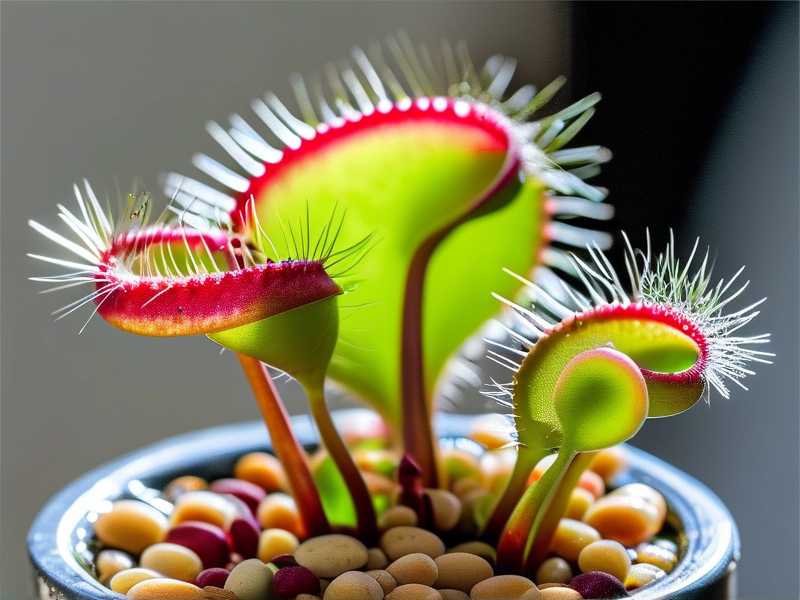
Also, if your sundew is old and dying, letting it flower one last time might give you a batch of seeds to start the next generation. I had an old Drosera hamiltonii that was declining. I let it flower, collected about 30 seeds, and then the plant passed. It was a good trade.
But for the common houseplant sundew, don’t let flowering happen. It’s not worth the energy drain.
My Personal Observation on Energy Balance
After cutting dozens of flower stalks, I can tell you this: sundews are resilient. They don’t hold grudges. If you cut a stalk, the plant won’t sulk. It will simply try again, but each attempt gets weaker. After 3-4 stalk removals, the plant gives up and focuses on growth.
I’ve also noticed that plants in smaller pots flower more aggressively. My smallest potted sundew, planted in a 2-inch pot, sent up a flower stalk the first week I brought it home. It was stressed from being root-bound. I repotted it into a 4-inch pot, and the flowering behavior stopped.
Pot size matters more than you think. A sundew with room to spread roots feels safe. A crowded one feels threatened. So if you’re struggling with constant flowering, check the root space first. If roots are circling the bottom of the pot, repot.
Common Questions I Get From Other Sundew Owners
How Many Seeds Does a Single Sundew Flower Produce?
A single Drosera capensis flower stalk can produce anywhere from 300 to over 1,000 seeds, depending on the number of flower buds. In my experience, one average stalk has about 20 flowers, and each flower produces a capsule with at least 50 seeds. That’s 1,000 potential new plants if you don’t stop it. This is why cutting early is crucial. If you don't remove the stalk, you will have a seed bonanza.
Can I Still Repot a Sundew After Removing Flower Stalks?
Yes. In fact, I recommend it. If your sundew has sent up multiple flower stalks in a short time, it’s probably stressed. After you cut the stalks, wait about a week to let the plant recover. Then repot into fresh sphagnum moss or perlite mix. I did this with a struggling Drosera regia, and it bounced back within a month. Avoid repotting while flower stalks are growing, because the extra stress can cause the plant to wilt permanently.
Will Sundews Grow Back If I Cut the Flower Stalk Too Low and Damage the Center?
Usually yes, but it depends. If you accidentally remove a few leaf tips around the stalk, the plant will recover in 2-3 weeks. But if you cut the entire rosette core, you might kill it. I’ve done this once. I was too aggressive, snipped straight through the growing tip, and the plant had to produce a new shoot from its roots. It took two months, but it eventually recovered. So be gentle. Snip only the stalk, not the surrounding flesh.
Final Thoughts on Controlling Sundew Seed Production
Look, I wish someone had told me in the beginning that flower stalks were the enemy of sundew health. I would have saved three plants. But now I check daily, I cut early, and I rarely see a single seed. My sundews are dewy, thick, and idyllic.
The easiest habit to adopt: every time you water your plants, glance at the center. If you see a naked stem, cut it. No exceptions. After two weeks of this, your sundews will stop attempting to reproduce, and your plants will be better for it. Regarding additional research, groups like the RHS have some general guidelines on carnivorous plant cultivation, and the AHS offers solid regional tips, but nothing beats consistent personal observation with scissors in hand.