bluename
How to Prepare Sundew for Cold Winter Nights Outdoors
If you grow sundews outdoors and you're staring down your first hard freeze, here's the short answer: most temperate sundews survive winter as dormant buds or tight rosettes, but tropical species will die unless you move them indoors. I learned this the hard way after losing an entire tray of Drosera capensis to a single night at 28°F. So in this guide, I'll walk you through exactly how to prepare sundew for cold winter nights outdoors, based on what I've actually done in my own backyard bog pots over multiple winters.
I've been growing carnivorous plants for about eight years now. Sundews are my favorite genus, but they're also the ones I've killed the most. Contact time with real plants teaches you things no book will. So let me share what actually works, including the mistakes I made so you don't repeat them.
Understanding Your Sundew Before Winter Hits
Not all sundews handle cold the same way. This is the first thing to figure out. If you skip this step, you might protect a plant that didn't need it or expose one that desperately needed shelter.
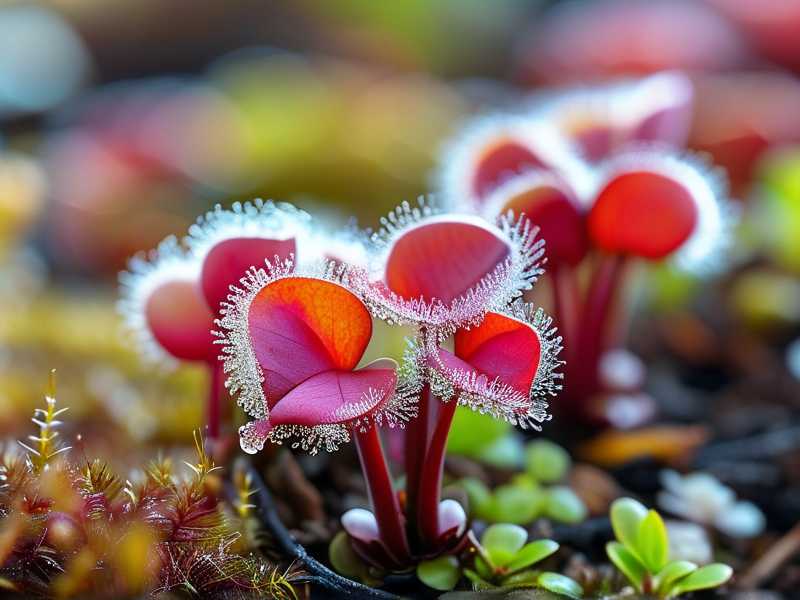
Temperate species like Drosera rotundifolia, Drosera intermedia, and Drosera filiformis form winter resting buds called hibernacula. These buds sit right at soil level and can handle temperatures well below freezing. I've had D. filiformis come back strong after a week of nights in the low 20s°F.
Subtropical species like Drosera capensis and Drosera aliciae can tolerate a light frost but not a prolonged freeze. Tropical species like Drosera adelae will turn to mush below about 40°F.
The Royal Horticultural Society notes that most hardy carnivorous plants benefit from a sheltered winter position and reduced watering, which lines up perfectly with what I've observed. The American Horticultural Society also emphasizes matching plant hardiness to your local winter conditions before choosing a permanent outdoor spot.
Honestly, the simplest move is to check your species tag or look up its native range. If it comes from a region with snowy winters, it's probably fine outside with some protection. If it's from Queensland or South Africa's lowlands, plan to bring it in.
My 2-Week Observation: What Actually Happens as Cold Sets In
Last October, I set up a simple test. I kept three potted sundews outside on my patio as nighttime temps dropped from 55°F to 38°F over two weeks. I checked them every morning.
Week 1: Growth slowed noticeably. New dew production dropped by maybe half. Leaves stayed green but looked less juicy. No big deal.
Week 2: The temperate sundew started pulling its leaves into a tight bud. The subtropical one stopped making new leaves entirely and older leaves began browning at the tips. The tropical one looked stressed, with dew drying up completely.
What I took away from this: you'll see clear signals before real damage happens. The plant tells you when it's time to act. Don't wait for black mush.
I also learned that wind matters as much as temperature. A 40°F night with dry wind did more visible damage than a still 34°F night. So shelter is not optional.
Light: What Changes in Winter and What to Do About It
Sundews need light year-round, even when dormant. But winter light is weaker and shorter, especially if you're in Canada, the UK, or northern US states.
Outdoors, most temperate sundews can handle full sun in summer but appreciate a bit of afternoon shade in winter if they're in a spot that gets reflective heat from a wall. That said, don't move them into deep shade. Dormant plants still photosynthesize slowly, and without light, they rot instead of resting.
For subtropical sundews that you're overwintering indoors, a south-facing window is the minimum. I've found that a simple 20-watt LED grow bulb positioned 6 to 8 inches above the plant for 10 hours a day keeps them alive and even growing slowly.
Too little light causes pale, stretched leaves and weak dew. Too much light in winter isn't usually a problem outdoors, but indoors it can cook a plant that's already stressed. I've burned a D. capensis this way by putting it too close to a hot bulb. Learn from my mistake.
Watering: The Single Biggest Factor in Winter Survival
Here's the line that matters: 90% of indoor plants die from overwatering. That statistic applies double for sundews in winter.
Sundews normally sit in standing water during the growing season. In winter, that changes completely. Temperate species in dormancy want soil that's barely moist. Subtropical species indoors want damp but never soggy conditions.
My rule: if you squeeze a handful of soil and water drips out, it's too wet for winter. If it feels like a wrung-out sponge, that's about right.
For outdoor temperate sundews, I stop topping up the water tray in late autumn. Rain usually provides enough moisture. If you're in a dry winter climate, water lightly once every 10 to 14 days, just enough to keep the soil from going bone dry.
For subtropical sundews indoors, I water from the top once a week, letting excess drain away. I never let them sit in water for more than an hour in winter. This one change saved my remaining capensis.
Signs of overwatering: black roots, mushy crown, fungus gnats, sour smell. If you see these, stop watering immediately, repot into fresh dry-ish soil, and cross your fingers.
Soil and Repotting Before Winter
Don't repot in winter. That's the rule. Repotting stresses roots, and stressed roots plus cold equals death. Do your repotting in early spring or right after dormancy breaks.
That said, if you're moving a plant indoors for winter, you can do a light refresh. I sometimes top-dress with fresh sphagnum moss to improve air flow around the crown.
The right soil mix for sundews is simple: 1 part peat moss to 1 part perlite, or 2 parts peat to 1 part sand. No fertilizer. No Miracle-Gro. That stuff will kill them.
For pots, glazed ceramic or plastic both work. Terracotta dries out too fast in summer and cracks in freeze-thaw cycles outdoors. I use plastic pots for outdoor wintering because they flex instead of breaking.
Pot size matters too. A pot that's too large holds too much water and stays wet too long. I keep sundews in pots that are just slightly wider than their root ball. This is one of the three deadly mistakes I'll get to in a minute.
Fertilizing: When to Stop and Why
Sundews get nutrients from their prey, not from soil. Fertilizing is rarely necessary and often harmful.
In winter, stop fertilizing completely. No exceptions. Dormant plants can't process nutrients, and fertilizer salts build up in the soil, burning roots.
During the growing season, I use a very diluted orchid fertilizer at quarter strength, applied to the leaves only, maybe once a month. That's it. I've tested full-strength fertilizer on a spare sundew and watched it decline within days.
If you're growing indoors under lights in winter and your subtropical sundew is still actively growing, you can give one-quarter strength feeding once every six weeks. But if growth has stopped, stop feeding.
Season-by-Season Care That Actually Works
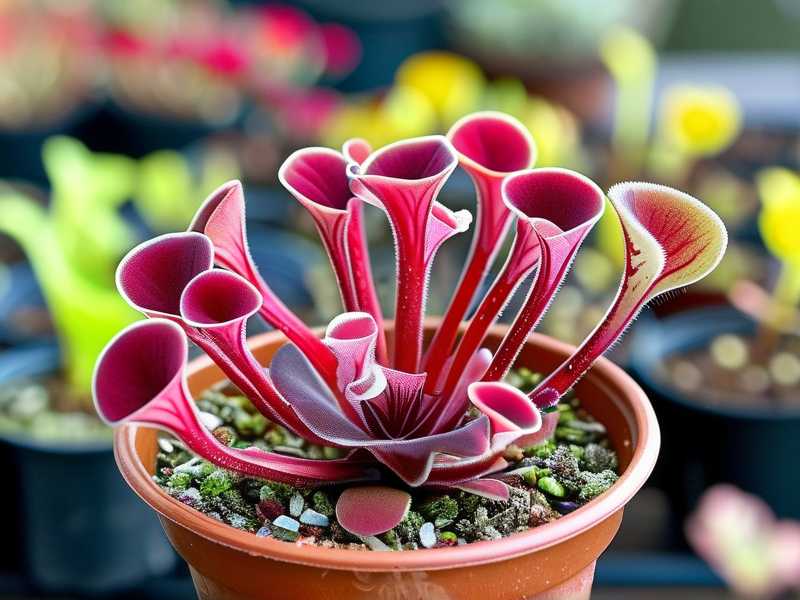
Spring: This is when everything wakes up. I start increasing water as soon as I see new growth. I remove dead leaves with clean scissors. I repot if needed. I resume light fertilizing. I also move outdoor plants back into full sun gradually, over about a week, to avoid sunburn.
Summer: Full sun, standing water, good air flow. I check for aphids and spider mites weekly. I shade subtropical species during heat waves above 95°F. I never let trays dry out.
Autumn: This is the transition. I reduce watering by half. I stop fertilizing. I clean up dead foliage. I start watching nighttime temperatures and plan my move date for tropical plants.
Winter: Temperate sundews stay outside in a sheltered spot. I pile a layer of dry leaves or straw mulch around the pots for insulation. I make sure pots don't sit in a puddle that freezes solid. Subtropical sundews come indoors to a cool room, ideally 45 to 55°F, with bright light and minimal water. Tropical sundews need a warm room above 60°F.
I've overwintered D. capensis in a cool garage with a shop light for three years running. They look rough by February but bounce back fast in spring.
Three Deadly Mistakes New Growers Make
Mistake 1: Overwatering in winter. I killed my first sundew this way. It looked fine in November, then turned black in December. The soil was soaking wet the whole time. Now I use a moisture meter and err on the dry side.
Mistake 2: Wrong light position. I once put a dormant sundew in a dark corner thinking it needed rest. It rotted within three weeks. Dormancy is not darkness. They still need light.
Mistake 3: Using the wrong pot. I tried terracotta outdoors one winter. The pot cracked, the soil froze solid, and the plant died. Plastic or glazed ceramic only for outdoor wintering.
Pests and Problems in Cold Weather
Cold, wet conditions invite fungal issues. Botrytis (gray mold) is the big one. It shows up as fuzzy gray patches on dead leaves and spreads fast. Remove affected leaves immediately and improve air flow.
Aphids can survive mild winters and attack new growth in early spring. I treat them with a diluted insecticidal soap, applied on a mild day above 50°F.
Yellow leaves in winter usually mean too much water or not enough light. Brown crispy leaves mean dry air or cold damage. Mushy crown means root rot, and at that point, you're usually too late.
FAQs
Can sundews survive freezing temperatures outdoors?
Temperate species can survive hard freezes as dormant buds. Subtropical and tropical species cannot and need indoor protection before the first frost.
Should I cut back my sundew before winter?
Only remove dead or dying leaves. Don't cut healthy tissue. Temperate sundews need their leaves to form hibernacula.
How often should I water a sundew in winter?
Barely at all. Outdoor plants usually get enough from rain. Indoor subtropical sundews need a light watering every 7 to 14 days, depending on humidity and temperature.
The bottom line is this: know your species, cut back water hard, keep them in the right light, and don't repot until spring. Do that, and your sundews will come back stronger when warm weather returns.