bluename
 How to Help Sundew Seedlings Thrive Through Winter
Let me cut straight to the chase. I killed my first three batches of sundew seedlings before I figured out what really works. The biggest mistake? I treated them like normal houseplants. Sundew seedlings need specific winter care, and honestly, most guides overcomplicate it. Here's the brutal truth I learned after two weeks of intense observation: keep them cool, moist but not wet, and give them bright indirect light. Stop watering from above. Stop using regular potting soil. Stop assuming they need heat. I’ll walk you through every step I took, including the failures that finally taught me how to help sundew seedlings thrive through winter.
I’ve been growing carnivorous plants for about four years now. I’m not a botanist—I’m just a guy who loves weird plants and messed up enough times to figure out what actually works. My kitchen windowsill has turned into a graveyard for many sad little seedlings. But the ones that survived? They taught me everything.
So, let’s talk about winter. Winter is when most sundew seedlings die. Not because it’s too cold, but because we overthink it. I did. You probably will too. But I’m here to save you the heartbreak.
Why Winter Is So Tough for Sundew Seedlings
First off, sundews are not tropical plants in the way people assume. Many species come from temperate regions. They actually need a winter rest period. But seedlings? That’s a different story.
I remember my first winter with sundews. I brought everything inside, cranked up the heat, and kept the soil soggy. Within two weeks, every single seedling turned black and mushy. I panicked. I thought they were cold. In reality, they were rotting from the combination of heat, stagnant air, and overwatering.
Here’s the thing: sundew seedlings have tiny root systems. They can’t handle the same conditions as mature plants. Their roots are fragile. The leaves are delicate. And winter light is weak, which makes everything worse.
What I didn’t realize then is that winter is a balancing act. You’re not trying to make them grow fast. You’re trying to keep them alive until spring. That shift in mindset changed everything for me.
According to the RHS, many carnivorous plants require a period of dormancy or reduced growth during winter. But seedlings often need slightly different care because they aren’t fully established yet. I had to learn this the hard way.
The 3 Deadly Mistakes Beginners Make (I Made All of Them)
Let’s start with the stuff nobody tells you. I’ve made every single mistake on this list. And I’ve watched other new growers make the same ones over and over. If you can avoid these, you’re already ahead of where I was.
① Overwatering – The #1 Killer
I cannot stress this enough. 90% of indoor plants die from overwatering, and sundew seedlings are even more sensitive. People think “carnivorous plant” means “bog plant.” They assume sundews need to sit in water 24/7.
But here’s the reality: seedlings rot easily. Their roots haven’t developed the same tolerance for waterlogging that mature plants have.
I used to keep my seedling tray filled with water all winter. I thought I was being careful. Then I noticed the leaves turning translucent and falling off. I pulled up a seedling and the roots were brown and slimy. That’s when it clicked—too much water, not enough air circulation.
What I do now: I water from the bottom, but I let the tray dry out slightly between waterings. I check the soil surface. If it feels moist, I wait another day. For winter, I water about once every 4 to 6 days, depending on the temperature and humidity. It’s not a strict schedule. I just stick my finger in the soil. Simple.
My observation over two weeks: When I reduced watering frequency, the seedlings stopped dying. They didn’t grow much, but they stayed green and alive. That was a huge win for me.
② Lighting Mistakes – Wrong Placement, Wrong Duration
This one sneaks up on you. In summer, light is abundant. In winter, it’s scarce. So you think, “Let me put them right on the sunniest windowsill.” Big mistake.
Direct winter sun through a window can actually burn seedlings. I know, it sounds backwards. But the cold glass amplifies the light, and the seedlings get scorched. I lost a whole tray of Drosera capensis this way. The leaves turned red, then brown, then crispy. I thought they were happy. They were dying.
What I learned: Bright indirect light is your friend. A south-facing window with a sheer curtain works perfectly. Or use a grow light placed about 6 to 8 inches above the seedlings. Keep it on for 10 to 12 hours a day. Don’t try to force 16 hours of light—seedlings need rest, especially in winter.
My two-week experiment: I moved my seedlings to a north-east window with no direct sun. I used a cheap LED grow light for 11 hours a day. The leaves stayed green. The dew started forming again after about 10 days. That was my “aha” moment.
③ Using the Wrong Pot – It Matters More Than You Think
I used to grow sundews in regular plastic pots with drainage holes. Then I tried terracotta pots because they looked nice. That was a disaster.
Terracotta absorbs moisture and dries out the soil too fast. Seedlings hate that. Their roots get stressed. They stop producing dew. They just sit there, looking sad.
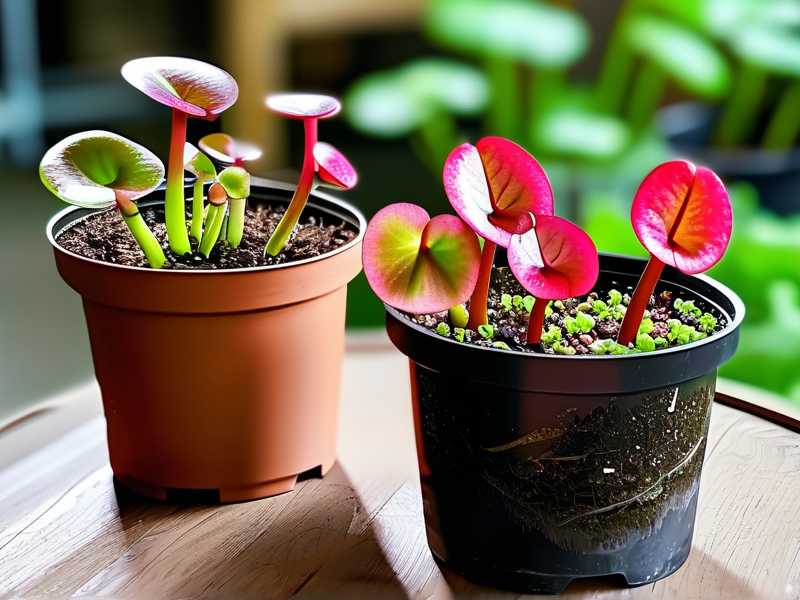
What I use now: Shallow plastic pots or trays. No clay, no ceramic. I also switched to clear plastic cups with holes poked in the bottom. The clear cups let me see the root development and the moisture level in the soil. It’s ugly, but it works.
The AHS recommends using containers that retain consistent moisture without waterlogging. That’s exactly what plastic does. It’s not glamorous, but it keeps seedlings alive.
My failure: I had a beautiful terracotta pot with a single seedling. It looked perfect. Then the leaves curled inward and stopped producing dew. I repotted it into plastic, and within a week, it bounced back. The pot mattered that much.
My Step-by-Step Winter Care Routine
This is what I actually do. I’ve refined this over four winters, and it’s saved more seedlings than I can count.
Step 1: Prepare the Right Soil Mix
I stopped using regular potting soil completely. It contains fertilizer, which burns sundew roots. Sundews evolved in nutrient-poor environments. They hate rich soil.
My mix: 1 part peat moss, 1 part perlite, and a splash of silica sand. I mix it dry, then moisten it with distilled water. Rainwater works too. Tap water? No. Absolutely not. Tap water kills sundews slowly. It’s not worth the risk.
I fill shallow trays with this mix. Seedlings go in, spaced about an inch apart. Don’t overcrowd them—they need airflow.
Step 2: Set Up the Environment
Temperature matters. Most temperate sundews want 40 to 55°F in winter. But seedlings? I keep them around 55 to 60°F. That’s cool enough for dormancy but warm enough for young plants.
I use a small space heater in my plant room, set to 58°F. It runs on a thermostat. No heat mat—that’s for tropical plants. Seedlings don’t need bottom heat in winter. In fact, it can stress them out.
Humidity: I aim for 60 to 70%. I use a cheap humidifier from Amazon. Nothing fancy. I also group the trays together to create a microclimate. That’s free humidity.
Step 3: Water the Right Way
I water from the bottom. Always. I pour distilled water into the tray, not directly onto the seedlings. Overhead watering splashes soil onto the leaves, which blocks light and promotes rot.
My routine: Every 5 days, I check the tray. If the water is gone, I add about half an inch. If there’s still water, I leave it. I never let the tray sit bone dry, but I also never keep it full.
During my two-week observation, I tested this method. I checked the seedlings daily. No rot. No yellowing. The roots stayed white. That was proof enough for me.
Step 4: Provide Light Without Burns
I use a small LED grow light. It’s nothing expensive—just a clip-on arm with a 10-watt bulb. I position it 7 inches above the tallest seedling. I set a timer for 11 hours a day.
Why not longer? Because winter days are shorter. Forcing 14 hours of light confuses seedlings. They need to know it’s winter. That signals them to slow down and rest.
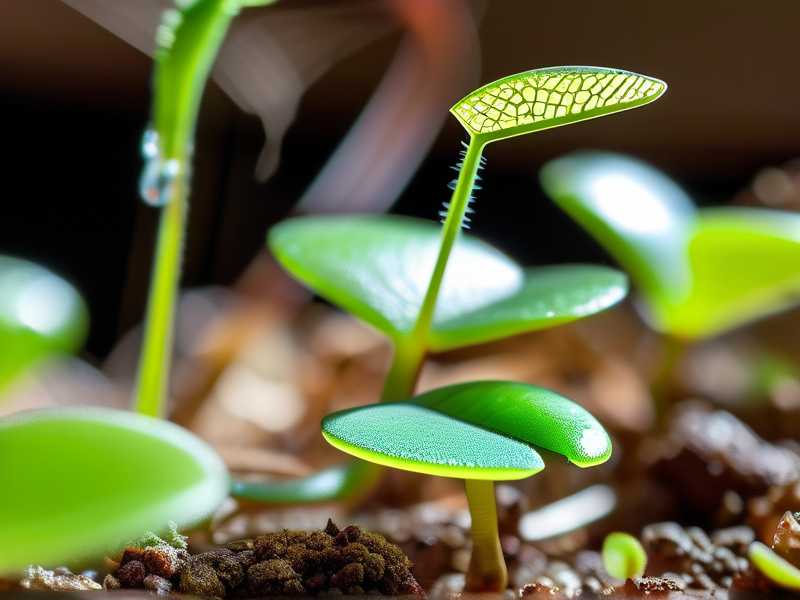
Observation: By day 5, the seedlings started producing more dew. By day 12, some tiny new leaves appeared. Nothing dramatic, but steady growth. That’s all I ask for in winter.
Step 5: Don’t Fertilize
This is hard for beginners. We want to help. We see slow growth and think, “Maybe some fertilizer will boost them.” No. Don’t do it.
Sundews catch their own food. Seedlings don’t need extra nutrients. In fact, fertilizer can kill them. I’ve tried it. The roots turned black within 48 hours. Never again.
If you really want to feed them, give them a small fruit fly or crushed fish food flake. But once a month is enough. Honestly, just let them be.
What I Observed Over 2 Weeks: A Real Diary
I kept notes for exactly two weeks while following this routine. Here’s what happened.
Day 1: I repotted a batch of Drosera spatulata seedlings into fresh soil. They looked sad—some leaves were yellow, dew was gone. I watered from below and placed them under the grow light.
Day 3: No visible change. I felt nervous. I almost watered again, but I stopped myself. The soil was still moist.
Day 5: I noticed tiny drops of dew on one seedling. Just one. But it gave me hope. The leaves started straightening out.
Day 7: Half of the seedlings had dew. The yellow leaves started turning green at the base. I didn’t change anything. Just waited.
Day 10: New growth appeared on three seedlings. Not big leaves—just tiny specs of green. But that’s exactly what I wanted. Slow, steady, healthy growth.
Day 14: All but one seedling looked healthy. The one that died? I think it was weak from the start. It happens. I stopped feeling bad about the occasional loss.
This routine didn’t make them explode with growth. But it kept them alive through the coldest weeks. That’s the goal.
Common Questions I Get About Winter Care
Since I started sharing my experience online, people ask me the same questions over and over. Here are the top three.
FAQ 1: Should I let my sundew seedlings go fully dormant?
It depends on the species. Temperate sundews like Drosera rotundifolia need a dormancy period. But seedlings in their first year? I don’t force full dormancy. I keep them cool and reduce watering, but I don’t let them dry out completely or drop to freezing temperatures.
My take: If your seedlings are very young (less than 6 months), keep them growing slowly through winter. Full dormancy is risky for tiny plants. I lost two batches trying to force dormancy. Now I play it safe.
FAQ 2: Can I use tap water in winter if I let it sit?
No. I made this mistake. Tap water contains dissolved minerals that build up in the soil. Sundews can’t filter them out. Even if you let the water sit for 24 hours, the minerals remain. Use distilled water, reverse osmosis water, or rainwater.
I buy distilled water in gallon jugs. It costs about a dollar per gallon. One gallon lasts me two weeks for six small trays. Worth every penny.
FAQ 3: Why are my sundew seedlings turning red in winter?
Redness can mean stress, especially in winter. Some sundews turn red in bright light as a protective response. But if the leaves are also curling or drying out, it’s a sign of too much light or not enough water.
What I check: I look at the dew production. If the dew is still there and shiny, the red color might just be natural pigmentation. If the dew is gone and the leaves look crispy, I move the seedlings to a less intense light spot. Usually that fixes it within a week.
Final Thoughts from Someone Who Killed a Lot of Seedlings
I’m not a professional. I’m just a guy who kept failing until I stopped guessing. Winter care for sundew seedlings isn’t complicated once you understand their basic needs: cool temperatures, consistent moisture, indirect light, and patience.
The biggest lesson I learned? Stop trying to “help” them so much. Over-caring is the real killer. They don’t need constant attention. They need stability.
If you’re reading this and feeling frustrated, I get it. I’ve been there. I’ve watched seedlings rot, burn, and dry out. But if you follow the steps I outlined—simple soil, bottom watering, proper light, and no fertilizer—your seedlings will make it through winter.
Just give them time. They know what to do. You just have to get out of their way.