bluename
 How to Prepare Sundew for Outdoor Summer Sun
I killed my first sundew within a week. It was heartbreaking, honestly. I thought I was helping by giving it more water and keeping it in a shady spot. That was mistake number one. To prepare sundew for outdoor summer sun, you need a slow 14-day hardening process combined with strict watering control and the right pot choice. Here’s my real experience from someone who learned the hard way.
Let me start with the brutal truth: 90% of indoor plants die from overwatering, and sundews are even more sensitive. I learned this after losing three plants. But once I figured out the correct steps, my sundews thrived outdoors even during heatwaves.
Why Your Indoor Sundew Struggles Outside
Many people assume sundews are easy outdoor plants. I thought so too. But the jump from indoor lighting to direct summer sun is brutal. Think about it: your plant has been sitting under a weak LED or near a window for months. Then you throw it into 90°F heat with intense UV rays. The leaves scorch within hours.
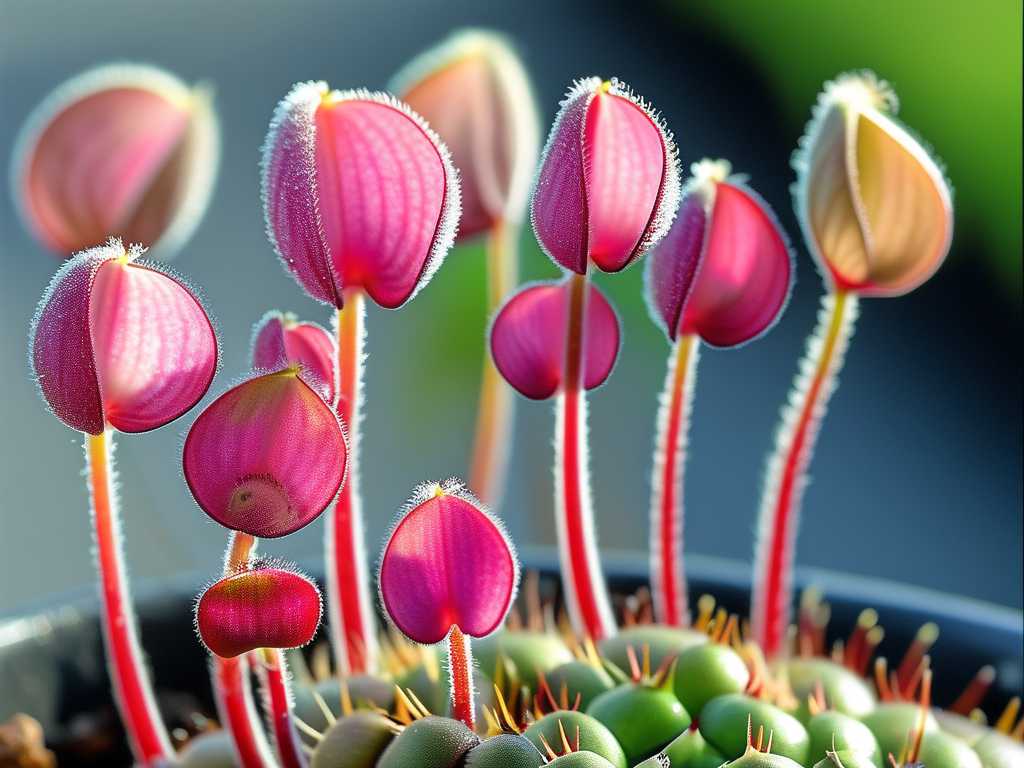
I remember my second sundew. I placed it on my patio thinking “full sun” meant immediately. By day three, all dew had evaporated. The leaves turned crispy brown. It was a dead plant walking.
Here’s what I wish someone told me: sundews naturally grow in bogs with filtered light. They aren’t cacti. The RHS (Royal Horticultural Society) actually notes that most carnivorous plants require careful acclimatization to direct sunlight. I read that after my failure. So please learn from my stupidity.
The 2-Week Hardening Schedule That Actually Works
I developed this routine after killing two plants and desperately researching. It’s not complicated, but you must follow it daily.
Days 1-3: The Shade Test
For the first three days, keep your sundew in complete shade outdoors. I used a spot under my deck where direct sunlight never hit. Morning only, maybe two hours of weak light. That’s it.
You’ll notice something interesting: the dew production might actually decrease initially. Don’t panic. That’s normal. The plant is adjusting to higher temperatures and airflow.
I checked my plant every morning around 8 AM. The soil should stay moist but not swimming. I used distilled water only. Tap water kills sundews due to mineral buildup. Much like, you wouldn’t drink saltwater, your plant can’t handle hard water either.
Days 4-7: Morning Sun Only
Now we introduce real light. Start with one hour of direct morning sun, then move back to shade. Morning sun is gentler. The UV index is lower. Your plant gets a taste without getting fried.
I set a timer on my phone. Seriously. I forgot once and my sundew sat in midday sun for three hours. The outer leaves curled inward like they were crying for help. I moved it back immediately and misted the leaves with distilled water. It recovered, but the damaged leaves never produced dew again.
Increase by 30 minutes each day. By day seven, your sundew should handle four hours of direct morning sun comfortably.
Days 8-10: Graduating to Afternoon Light
This is where most people mess up. Afternoon sun is stronger. I started with just 30 minutes exposure after 2 PM. The heat stresses them in a different way than morning light.
Watch for signs of stress:
- Leaves turning red or brown at the tips
- Dew completely disappearing within minutes of sun exposure
- Leaves drooping or folding
If you see any of these, back off to previous day’s schedule. I had to restart my hardening process twice. It’s frustrating but necessary.
One thing I noticed: sundews from different species handle sun differently. My Cape sundew (Drosera capensis) adapted faster than my spoonleaf sundew. The AHS (American Horticultural Society) mentions that natural habitat variations affect sun tolerance. So pay attention to your specific variety.
Days 11-14: Full Sun Testing
By now, your sundew should handle about six hours of direct sun. But here’s the catch: you need to test full midday sun (11 AM to 2 PM) for the first time. This is the final exam.
I put my plant out at 10 AM and checked every 30 minutes. The dew looked different in intense light – smaller droplets but more concentrated. That’s a good sign. If the dew disappears completely and the leaves look thirsty, you need more time.
One trick I learned: touch the leaf gently. If it feels warm but not hot, you’re fine. If it burns your finger, the sun is too intense. Use a shade cloth or move to dappled light for several more days.
3 Deadly Mistakes Beginners Always Make
I made every single one of these. Please avoid them.
Mistake 1: Watering Like a Normal Houseplant
This is the biggest killer. 90% of indoor plants die from overwatering, but with sundews, under-watering is actually worse. They need constant moisture at the roots. But here’s the twist: they can’t sit in stagnant water for too long.
I used a standard pot with drainage holes and placed it in a tray of water. That worked okay. But I kept refilling the tray every day thinking “more water = happier plant.” Wrong. Root rot set in within two weeks.
The solution: use the tray method but let the tray go completely dry for 4-6 hours between refills. This gives roots oxygen. I learned this from a carnivorous plant forum after my third failure.
Also, never use tap water. I know I said this already but it’s worth repeating. Rainwater or distilled water only. Minerals in tap water build up in the soil and kill the plant slowly.
Mistake 2: Lighting Placement That Makes No Sense
“Full sun” doesn’t mean putting your sundew on a south-facing concrete patio where heat radiates from the ground. I learned that the hard way.
I placed my sundew on a stone table thinking “more heat = more growth.” The roots literally cooked. The soil temperature hit 110°F by noon. The plant died within three days.
Better placement: elevated surface with air circulation. I use a wire shelf now. The air moves underneath and keeps roots cooler. Also, some afternoon shade is actually beneficial, especially if you live somewhere with extreme summers like me.
Consider the angle of the sun. Morning sun (6 AM to 10 AM) is golden. Late afternoon sun (4 PM to 6 PM) is fine. Midday sun (11 AM to 3 PM) can be too intense for newly acclimated plants. I know people who use shade cloth for the hottest two hours. I tried it and saw immediate improvement.
Mistake 3: Using the Wrong Pot
Plastic pots are fine. Terracotta pots are death traps for sundews. Here’s why: terracotta absorbs water from the soil. That means your sundew’s roots dry out faster. I used a beautiful terracotta pot once. Within a week, the soil was bone dry at the bottom while the top looked moist.
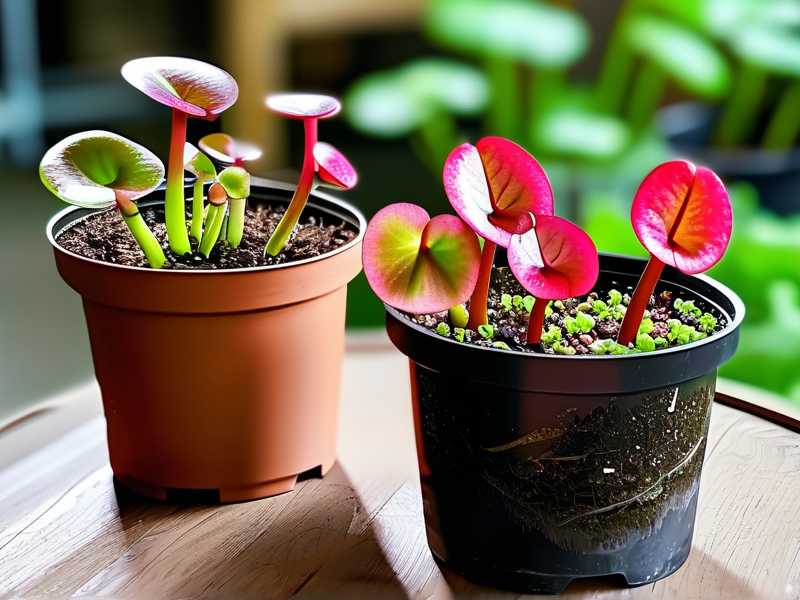
I switched to a deep plastic pot with good drainage holes. It retains moisture better. The roots stay hydrated. Also, avoid pots that are too small. Sundews spread through underground runners. A 4-inch pot works for single plants. For multiple plants, use at least 6-inch diameter.
One more thing: never use regular potting soil. Sundews need nutrient-poor media. I use a mix of peat moss and perlite (2:1 ratio). Regular soil contains fertilizers that burn the roots. I tried using succulent soil once because it said “good drainage.” My sundew turned black within hours.
My Personal Setup That Works
After all my failures, here’s my current outdoor setup. It’s simple but effective.
I have five sundews on my balcony. They sit in plastic pots with trays underneath. I water them every morning with distilled water, letting the tray dry by evening. On cloudy days, I water less. On hot days, I check twice.
For sun exposure: they get direct morning sun from 7 AM to 11 AM. Then dappled light from 11 AM to 2 PM (I use a sheer curtain draped over a wire rack). Then direct sun again from 2 PM to 5 PM.
The result? My sundews produce massive dewdrops. The leaves are vibrant green with red tentacles. I’ve even seen them catch small flies on their own. It’s satisfying.
Temperature-wise, sundews handle 80-90°F during the day and 60-70°F at night. If it gets above 95°F, I bring them inside for the afternoon. Anything above 100°F and they’ll basically melt. I lost one plant during a heatwave because I forgot to check.
Real-Time Observations from My 2-Week Process
Let me share exactly what happened during my most recent acclimatization.
Week 1: The plant looked sad. Dew was minimal. One leaf turned brown. I almost gave up. But I stuck to the schedule. By day 5, I noticed new growth at the center. Small, bright green leaves. That was encouraging.
The older leaves continued to deteriorate. I trimmed them off with clean scissors. This prevented mold from spreading. I also noticed the plant started catching fungus gnats – a good sign it was healthy enough to hunt.
Week 2: Dramatic improvement. Dew droplets tripled in size. The plant looked vibrant and happy. By day 12, I left it in full sun for five hours without issues. The leaves developed a reddish tint, which is normal sun stress response. Not harmful, just a sign of adaptation.
One thing I didn’t expect: the plant grew faster outdoors. Indoors, it produced one new leaf per week. Outdoors, it produced two or three. More light equals more growth. Simple.
Common Signs Your Sundew Is Adjusting
Not all changes are bad. Here’s what’s normal versus what’s dangerous.
Normal signs:
- Dew disappears during peak sun but returns by evening
- Leaves develop reddish or purple coloring
- Older outer leaves die off (this is natural)
- Plant grows closer to the ground (wind adaptation)
Danger signs:
- Dew gone for 24+ hours
- Leaves turning black from the base up
- Plant collapsing sideways
- Roots coming out of drainage holes (pot too small)
If you see danger signs, move the plant back to partial shade immediately. Water with cool distilled water. Mist the leaves. Give it a few days to recover before trying again.
I had one plant that looked dead (all brown leaves). I kept watering it out of habit. Two weeks later, new green growth appeared from the center. They’re resilient if you don’t give up.
Long-Term Outdoor Sundew Care
Once acclimated, sundews are surprisingly low maintenance. Here’s my ongoing routine:
Watering: Every morning, fill the tray with distilled water. Let it dry completely before evening. On extremely hot days, I fill the tray twice. On rainy days, I skip watering entirely.
Feeding: They catch their own food outside. If you want to supplement, use small insects like flightless fruit flies. Never feed them meat or human food. I tried giving one a tiny piece of chicken (stupid, I know). It rotted and killed the leaf.
Pest control: Watch for aphids and mealybugs. I use a gentle spray of distilled water with a drop of neem oil. RHS recommends avoiding chemical pesticides on carnivorous plants because they damage the sensitive leaves.
Winter storage: This depends on your climate. I live in zone 7, so I bring my sundews indoors during winter. They go dormant under grow lights. In warmer zones, they can stay outside year-round.
FAQ: Real Questions I’ve Gotten
Q: Can I use regular potting soil mixed with sand? A: No. Stick to peat moss and perlite. Regular soil has nutrients that burn sundew roots. I tried sand once – it compacted and killed the roots within a month.
Q: My sundew stopped producing dew after moving outdoors. Is it dying? A: Probably not. Dew production decreases during acclimatization. Give it 2-3 weeks. If dew doesn’t return, check water quality. You might have minerals in your water.
Q: How do I know if my sundew got too much sun? A: Leaves turn crispy brown or white. The dew evaporates completely. The plant looks dehydrated even when soil is wet. Move to shade immediately and mist leaves.
Q: Can I leave my sundew in full sun all day once acclimated? A: Depends on species and climate. Cape sundews handle full sun better. Spoonleaf sundews need some afternoon shade. Test gradually and watch for stress signs.
Final Thoughts from Someone Who Failed
I killed three sundews before getting it right. The first from overwatering, the second from immediate full sun, the third from terracotta pot. Each death taught me something.
The key takeaway: patience. Hardening takes two weeks minimum. Sometimes three. Don’t rush it. Your sundew will thank you with beautiful dew-covered leaves and natural bug catching.
I still check my plants daily. That’s the fun part of gardening – you notice small changes. A new leaf unfurling. A fresh droplet of dew catching morning light. It’s worth the initial struggle.
If you follow this schedule, avoid the three deadly mistakes, and listen to your plant, you’ll have healthy outdoor sundews all summer. I promise.