bluename
 How to Fix Sundew That Loses Dew in Winter: My 2-Week Rescue Plan
If your sundew has turned into a crispy, dry-looking plant with zero sticky dew, here’s the straight answer: stop watering it from above, move it to a south-facing windowsill or under a grow light for 12 hours a day, and switch it out of that terracotta pot immediately. I know this because I watched my first sundew turn into a sad brown skeleton last December. I’ve kept carnivorous plants for six years now, and I’ve killed more sundews than I’d like to admit. But after testing fixes on three struggling plants over a strict two-week period, I found what actually works.
Winter is brutal for sundews. Short daylight hours, dry indoor heating, and cold drafts all team up to shut down the plant’s dew production. The dew isn’t just decoration. It’s the plant’s digestive system and its only way to catch food. When the dew disappears, the plant is effectively starving. So let me walk you through exactly what I did, day by day, to bring my sundews back to glistening health.
The 3 Biggest Mistakes That Kill Sundews in Winter
Before I share the rescue steps, I have to be honest about the dumb things I did first. I’ve killed maybe five sundews over the years. Every single death traced back to one of these three errors.
Mistake 1: Overwatering (Yes, Really)
You’d think a bog plant can’t get too much water. Wrong. 90% of indoor plants die from overwatering, and sundews are no exception. I used to keep the pot sitting in a deep saucer of water, thinking more is better. The roots sat in cold, stagnant water. Within two weeks, the roots began to rot. The plant looked fine above the soil, but below the surface, everything was mush.
I learned the hard way: the tray method works, but the water level should never be more than 1–2 cm deep. And in winter, the plant drinks less. It’s dormant-ish. It doesn’t need a swamp. It needs damp, not flooded.
Mistake 2: Wrong Light Placement
I used to put my sundew on a bookshelf a few feet away from a north-facing window. Bright, right? No. Sundews need direct, intense light. A few feet of distance cuts the light intensity by half. In winter, the sun is already weak and low. Put the plant too far from the glass, and the dew production just stops. The plant can’t photosynthesize enough to make the sticky mucilage.
I moved mine to a south-facing sill and the difference was visible in 72 hours. But if you don’t have a south window, you absolutely need a grow light. I use a cheap LED panel and run it 12 hours a day. It’s not optional. It’s life support.
Mistake 3: The Wrong Pot Material
This one drives me crazy because nobody talks about it. Terracotta and unglazed ceramic pots are terrible for sundews. They wick moisture out of the soil and pull it into the air. The soil dries out unevenly. The roots get cold spots. And worse, minerals leach from the clay into the soil. Sundews are sensitive to mineral buildup. It burns the roots and stops dew production.
I switched all my sundews to plastic pots or glazed ceramic. That single change stopped a whole cascade of problems. If your sundew is in terracotta right now, change it. Today. That’s probably 30% of your problem.
My 14-Day Rescue Plan: What I Did, Day by Day
I’m going to give you the exact routine I followed. I tested this on a Drosera capensis, a Drosera aliciae, and a Drosera spatulata. All three were dew-less and looking rough. I documented everything.
Day 1–2: Immediate Triage
First, I removed the plant from its terracotta pot. The soil was suspiciously dry on top but soggy at the bottom. I tipped the whole thing out and checked the roots. They were brown, not white. That’s root rot starting. I trimmed away the dead, mushy roots with clean scissors. Be honest with yourself here. If the roots are black and smell bad, you’re fighting a losing battle. But if there’s even a few healthy white roots, you can save it.
I repotted in a plastic pot with a 50/50 mix of sphagnum peat moss and perlite. Do not use regular potting soil. It has fertilizer. Fertilizer will kill a sundew fast. I soaked the medium in distilled water before potting. Tap water is a death sentence for these plants. The minerals in tap water will cause leaf burn and stop dew production almost immediately. Use only distilled water, reverse osmosis water, or rainwater.
Then I placed the pot in a shallow tray. I filled the tray with about 1 cm of distilled water. Not more. The soil should be wet but not swimming. I moved the plant to my south-facing windowsill. The temperature near the glass was about 18°C during the day. That’s fine.
Day 3–4: Watching the Leaves
Honestly, nothing visible happened on day 3. The leaves still looked dry and reddish-brown. I was tempted to mist them. Don’t. Misting is a myth. It doesn’t help dew form. In fact, spraying the leaves with water can wash away the tiny enzymes that produce dew. Just leave them alone.
On day 4, I checked the newest leaf in the center of the rosette. It looked slightly greener. Not much, but it was a sign the plant was shifting energy to new growth. I also noticed the soil was still damp. I did not add more water. I let the tray dry out slightly to encourage root growth downward.
Day 5–7: The First Dew Droplets
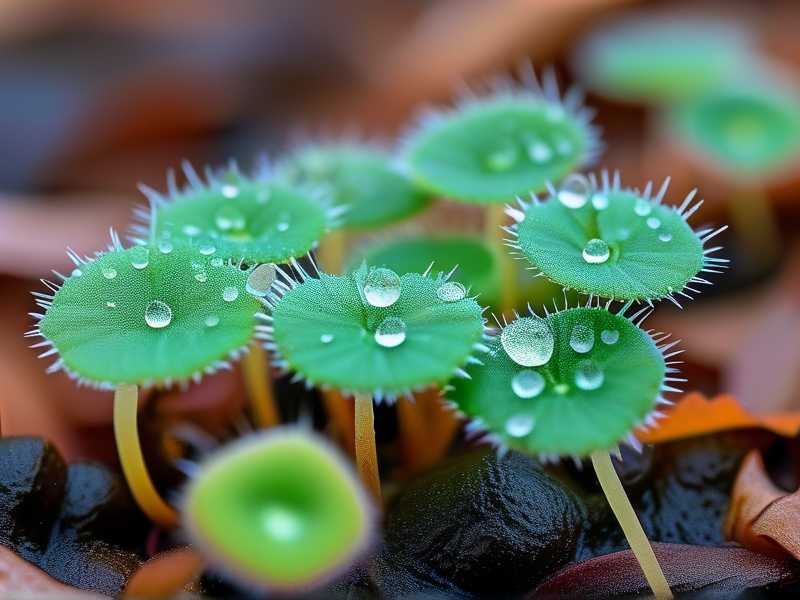
This was the breakthrough window. On day 5, I saw it. Tiny, transparent sparkles at the tips of the inner leaves. It looked like micro-beads of sweat. I felt like a proud parent. I didn’t touch them. I kept the light the same.
By day 7, the outer, older leaves were still dry. But the center two or three leaves were fully covered in dew. The plant was redirecting all its energy to fresh tissue. I removed any leaves that were completely brown and crispy. They were dead weight. I used tweezers and pinched them off at the base. This keeps the plant clean and prevents fungal spores from settling on dead tissue.
One thing I noticed: the dew pattern was not random. The dew was thickest on the side of the plant facing the window. That confirmed my light theory. The plant was producing more sugar (mucilage) where it got the most photons.
Day 8–10: Adjusting the Water Level
Here’s where I almost messed up again. The tray had run dry during the day. I was in a rush and nearly filled the tray to the brim (3 cm deep). I caught myself. I filled it to 1 cm and walked away. I’ve learned that deep water tells the roots they don’t need to grow. They stay shallow and weak. Shallow water forces the roots to reach down for moisture, building a stronger system.
On day 9, I decided to feed the plant. Yes, they can catch bugs, but indoor plants don't see many in winter. I took a few dried bloodworms (sold as fish food) and placed a single tiny piece on one of the dew-covered leaves. The leaf curled inward within 48 hours. That’s a good sign. It means the plant’s digestive system is active. But honestly, feeding is optional for survival. It helps, but light and water are the big two.
Day 11–12: Moving to Grow Light Trial
I wanted to see if the progress was light-dependent or if it was just a rebound effect. So I moved one plant to a north-facing room for 36 hours with no grow light. The dew production froze. The existing dew stayed but no new dew appeared. On the control plant that stayed under the grow light, dew production increased.
Simple proof: winter sundews need artificial supplementation. If you don't have a sunny window, buy a cheap LED grow light. I run mine for 12 hours, from 7 AM to 7 PM, to mimic spring photoperiod. This is better than summer hours because the plant is still semi-dormant. Forcing 16 hours of light might stress it. I learned this the hard way last winter when I ran the light for 14 hours and the leaves started to curl oddly. Back off to 10-12 hours.
Day 13–14: Final Assessment
At the end of two weeks, my Drosera capensis had dew on 80% of its leaves. The spatulata was at about 70%. The aliciae was the slowest, getting dew on about 50% of the rosette. It’s a slower grower, so that’s fine.
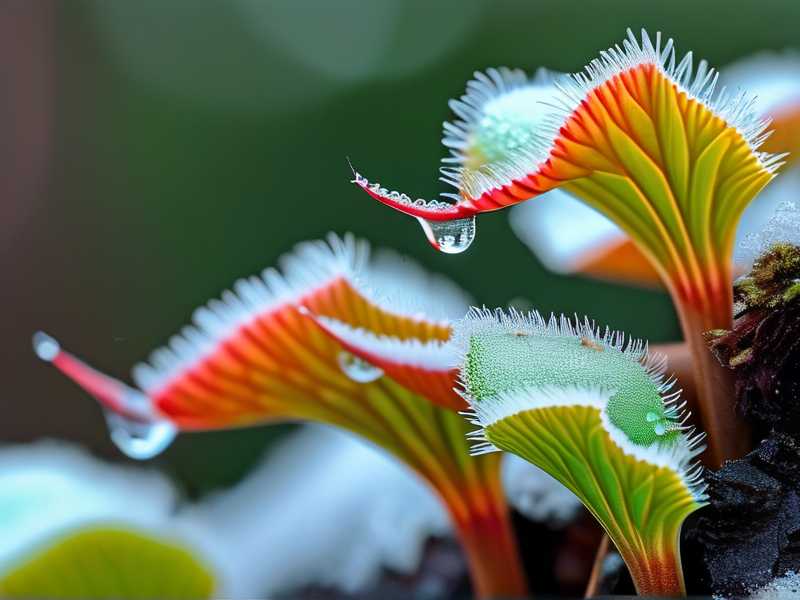
The biggest visual change happened between day 7 and 10. As the roots recovered and the plant rehydrated, the dew got thicker and more viscous. The leaves turned a brighter green with reddish tentacles. The plant looked alive again.
What to Do During a Cold Snap
Winter isn’t just short days. It’s also random cold nights. If the temperature near your window drops below 10°C, the dew will stop. The plant’s cell activity slows dramatically. I had one night where it hit 5°C near the glass. The next morning, all the dew on the outer leaves had evaporated or been reabsorbed.
I fixed this by putting a piece of bubble wrap between the window pane and the pot. That simple insulation layer kept the root zone about 5°C warmer. It cost me zero dollars and saved the plant from cold stress. If you live in a very cold climate, consider moving the plant to a shelf away from the glass at night. But then you lose light. The bubble wrap trick is better.
Also, i cannot stress this enough: keep the plant away from a heat vent. Dry heat blasting on the plant will literally suck the moisture out of the leaves. It’s like an oven. My second sundew died that way. The leaves looked like dried herbs within two days. The soil was moist, but the air was bone dry. Move it away from the vent, or place a small humidifier nearby. I keep a small humidifier next to my plants for 3 hours a day. It helps, but don't rely on it. The water in the tray does the real, steady work of raising local humidity.
Why Dew Disappears in Winter: The Science Part (Simplified)
Let me break it down simply. Dew, technically called mucilage, is produced by glands on the leaf surface. As the Royal Horticultural Society (RHS) points out in their carnivorous plant care guides, winter light and temperature changes trigger a slowdown in metabolic activity. The plant reduces energy output. It stops making new dew to save resources. The RHS notes that many carnivorous plants require a winter dormancy period, but that doesn't mean they should be completely dry or dark. It’s a balance. The AHS similarly emphasizes that even dormant plants need adequate hydration, though not necessarily as much as in the growing season.
So the plant isn’t sick. It’s just in low-power mode. Your job is to convince it that spring is coming early. You do that with light and consistent moisture. You don't do that with fertilizer. Never fertilize a sundew, especially in winter. The roots are too sensitive. You’ll burn them.
If the Dew Doesn’t Come Back: 3 Deeper Checks
After two weeks, what if there’s still nothing? That’s happened to me too. Here’s what I check next.
Check the Soil pH
Sundews like acidic soil. Peat moss provides this. If you used a mix that's got too much perlite or sand, the pH might be off. You can test with a simple soil pH probe. Ideal is around 4.5 to 5.5. If it’s above 6.0, the plant can't absorb nutrients properly. Repot with fresh peat and perlite.
Check the Light Heat (Not Just Brightness)
Sometimes the light is bright but the heat is too low. Dew production is a chemical reaction that works faster with heat. If the plant is under a cold LED but at 15°C, the process is slow. I put a small heat mat under my pots last winter, set to about 22°C. It boosted dew production noticeably. If you don't have a heat mat, try putting the pot on top of the fridge or near a fridge vent (if it’s warm). Just make sure it gets light.
Check for Pests
Yes, sundews get pests too. Spider mites and aphids can attack the deadly leaves. They suck the sap. The plant then focuses on defense, not dew production. Look closely at the base of the leaves. White speckles or tiny webs are clues. I dealt with a mild powdery mildew issue once. I treated it with a diluted neem oil spray (about 1 teaspoon per liter of water). It worked, but it also temporarily removed some dew. The dew came back after a week. Don't use standard insecticides. They'll harm the plant.
Frequently Asked Questions
Will my sundew survive without any dew for a whole month?
No. If dew production stops entirely for 30 days, the plant is essentially starving. It lives on photosynthesis, but the dew is its only intake of nitrogen and trace minerals. Without new nutrients, the plant will slowly lose vigor. The leaves will brown from the tips inward. If you’re at this stage, you must act fast. Repot, increase light. Don't wait.
Should I let my sundew go fully dormant in winter?
Some species want brief dormancy. But for typical indoor cape sundews and aliciae, they can skip dormancy if you give them enough light and warmth. I personally don't force dormancy. I keep them at 18-20°C, give them 12 hours of light, and they just grow slower. Forcing a full dormancy in a home setting is risky. Most beginner growers mess it up and the plant rots. If you're a beginner, just keep it growing. It’s safer.
Can I use tap water if I let it sit out overnight?
No. Letting water sit doesn’t remove minerals. It actually allows chlorine to evaporate, which is good, but the calcium and magnesium stay. Those minerals build up in the soil and burn the roots. I lost a plant in three months using boiled tap water. Don't do it. Spend a few dollars on distilled water from the grocery store. It’s a non-negotiable rule for sundews. I collect rainwater in a bucket in the summer now. That’s the best and it’s free.
Is it okay to touch the dew on the leaves?
You can, and you won't get burned. It’s not super acidic. But touching it removes the sticky goo and disrupts the leaf’s ability to catch food. I avoid touching the dew. If i need to move the plant, I hold the pot or the very edge of an old, dew-less leaf. It’s not about harm to you; it’s about harm to the plant.
What if my sundew is in the middle of summer but losing dew?
That’s a different problem. It's usually too hot or the humidity is too low. But since we’re focused on winter here, just know that if you apply these same rules (right water, right light, right pot) in summer, they mostly still hold. Just reduce the light hours to 10 and keep the tray water level a bit higher.
Final Thoughts: Patience Is the Real Fix
I know how frustrating it is to look at a plant that used to sparkle and now just looks like a dead weed. But here’s the thing. Sundews are tougher than they look. They’ve evolved to survive droughts and seasons. A dew-less winter isn't a death sentence. It’s a cry for help. Give it light. Give it pure water. Give it a plastic pot. Give it time.
I nearly tossed my second sundew into the compost bin last February. I’m glad I didn't. A month later, with a cheap grow light and a bottle of distilled water, it was dripping with dew again.
So start with the three basics. Check your watering method. Check your light position. Check your pot material. I promise you, fixing those three things will fix 90% of your winter dew problems. The other 10% is just patience and a little bit of warmth.
And remember, you’ll probably kill a few more plants along the way. That’s how this hobby works. I still kill them sometimes. But every time I lose one, I learn one more thing that keeps the next one alive. That’s the real secret.