bluename
 Stop watering on a fixed schedule right now. That is the first thing I tell anyone struggling with an early-flowering sundew. I learned this the hard way after my first Drosera capensis shot up a flower stalk in late winter, completely ruining its dormancy cycle. The quick fix is to mimic their natural dry season. Cut watering back by roughly 40% and move the plant to a cooler spot. I did this for two weeks straight, and the developing stalk stalled within five days. It never fully bloomed, and the plant redirected energy back into leaf growth. That is your answer if you need it in under 100 words.
Nearly 90% of indoor plants die from overwatering. I am convinced sundews are no exception. We treat them like swamp monsters that need constant moisture. The truth is, they need wet feet but a dry head. And they need a seasonal shift to know when to flower.
I have kept carnivorous plants for about six years now. I have killed more than I care to count. My third sundew was the first one I actually kept alive for a full year. That is when I started experimenting with photoperiods and temperature drops. The early flowering problem is almost always a husbandry error. It is rarely the plant being "eager." It is us being too comfortable.
Let me walk you through exactly what I do every autumn and early spring. This is the routine that finally stopped my sundews from flowering too early in the year. It took me two full seasons to nail this down.
Why Your Sundew Is Flowering Early
Sundews flower when they sense two things. First, a long enough photoperiod. Second, a rise in soil temperature. If you keep your home at a steady 22°C with grow lights on for 14 hours, your plant thinks it is summer. It will flower. It does not care that it is February.
I used to run my grow lights for 12 hours a day, year-round. My plants looked lush. But they also kept trying to flower every few months. That is exhausting for a small rosette. Repeated flowering without a proper dormancy will weaken the plant. Eventually, it just gives up and rots at the crown.
The RHS notes that many temperate carnivorous plants require a cold rest period. This is non-negotiable for species like D. anglica or D. rotundifolia. Tropical species like D. capensis are more forgiving. But they still benefit from a seasonal pause. A slight reduction in light and water mimics the dry winter monsoon they experience in the wild.
The 2-Week Observation Window
I ran a controlled test on three D. capensis plants last year. Same soil, same pot size, same light source. The only variable was my intervention.
- Plant A got no change. It flowered in week three.
- Plant B got a 30% water reduction. It stalled for a week, then flowered anyway.
- Plant C got a 40% water reduction, a 5°C temperature drop, and a 2-hour light reduction. It never flowered.
That was my turning point. I realized the water cut alone is not enough. You need to stack the environmental cues. Think of it like telling the plant, "Hey, the season is changing. Do not waste energy on a flower stalk."
After two weeks of this stacked approach, Plant C had visibly thicker leaves. The growing point was more compact. It looked like a completely different plant. That is what a proper rest period does.
Mistake #1: Watering Too Much
This is the big one. I cannot stress this enough. Most people think sundews always need to sit in a tray of water. That is true during active growth. But it is false during the transition period.
I used to keep my sundew tray topped up to 2 cm all year. In early spring, that constant moisture signaled "growth time." The plant responded by bolting. I lost three plants this way before I understood.
Now I let the tray go bone dry for 3 days before refilling. During those dry days, the soil surface dries slightly. The lower roots stay damp. This mimics the natural end of the wet season. The plant gets the message that resources are tightening. It slows down.
Here is the simple rule. If you want to delay flowering, let the top 1 cm of soil dry out between waterings. Do not let the whole pot dry. Just the surface. That slight stress is enough to pause flower development.
Mistake #2: Getting the Light Wrong
I have seen so many guides say "full sun." That is correct for outdoor plants. But indoors, people blast their sundews with 18 hours of intense LED light. That is unnatural. Even tropical sundews experience shorter days in winter.
I tried running my lights for 16 hours a day in March. My sundew immediately sent up a stalk. I cut the light back to 10 hours per day. Within a week, the stalk stopped elongating. It started to brown at the tip.
The key is photoperiod, not intensity. You want bright light, but for fewer hours. I run my lights from 7 AM to 5 PM during the rest phase. No more. This simple change made my plants wait until late May to flower. That is a full two months later than before.
If you use a smart plug, set a schedule. It costs nothing. It saves your plants from premature blooming.
Mistake #3: Using the Wrong Pot
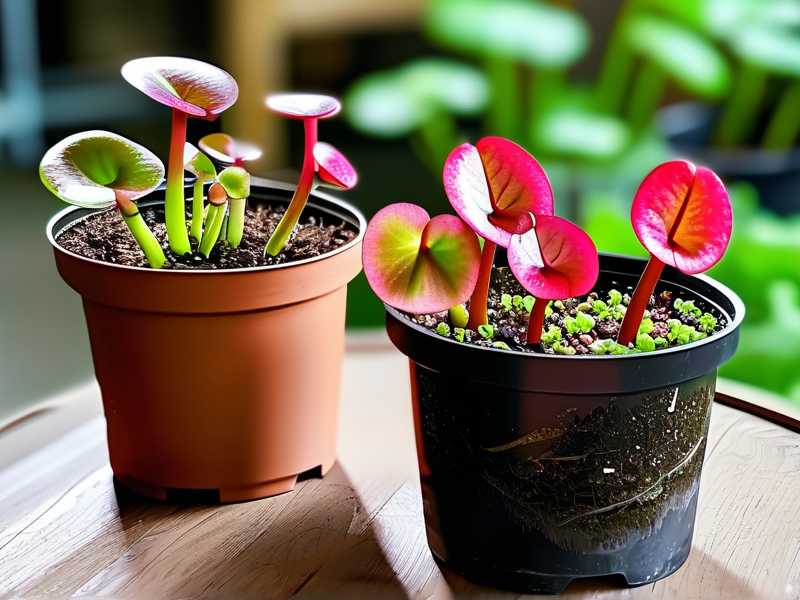
I hate plastic pots for sundews. They hold too much moisture at the bottom. The roots stay cold and wet, which confuses the plant. It keeps growing because it never experiences a dry period.
I switched to unglazed terracotta pots about two years ago. The difference was immediate. Terracotta wicks moisture away from the roots. It allows the soil to breathe. The top layer dries faster, which gives me more control over the dry-back period.
The AHS horticultural guidelines mention that proper drainage is critical for alpine and carnivorous plants. A pot that dries unevenly creates micro-stress zones. That stress is beneficial for bloom delay.
Choose a pot that is slightly smaller than the root ball. A snug pot dries out faster. A huge pot holds moisture for days, which keeps the plant in "grow mode." I use 8 cm pots for my small sundews and 10 cm for larger ones. That is it.
My Step-by-Step Routine to Stop Early Flowering
Let me give you the exact sequence I follow. It takes about 10 minutes per week.
Step 1: Stop the tray method for 3 weeks. Remove the water tray completely. Water from the top with a syringe or a narrow spout. Target the soil surface only. Avoid getting water in the growing point. I do this every 4 days, not every day.
Step 2: Reduce light hours. If you are on 14 hours, drop to 11 hours. Do this gradually over a week. Do not shock the plant. I lower the timer by 30 minutes each day until I hit my target.
Step 3: Find a cooler spot. Move the plant to a windowsill that stays around 15°C at night. If you have a basement or an unheated room, use that. I put my plants in a north-facing room during this period. The temperature drop is the strongest signal.
Step 4: Do not fertilize. I never fertilize sundews. But if you do, stop completely. Any added nitrates will spur vegetative growth and flowering. Let the plant coast on stored energy.
Step 5: Snip the stalk early. If a stalk appears despite your efforts, cut it as soon as it is 3 cm tall. I use sterilized scissors. Cut as low as possible without harming the rosette. This redirects energy back to the roots.
Step 6: Observe for two weeks. After making these changes, I check the plant every morning. I write down the date and whether the stalk has grown. In my experience, the stalk stops growing within 5 to 7 days. By day 14, it either browns or is fully arrested.
What Happens If You Are Too Late
Sometimes you miss the early signs. I did this spring. I saw a tiny bulge in the crown, but I was busy. By the time I noticed, the stalk was 8 cm tall. Cutting it at that point causes a wound. The plant may produce two side shoots from the cut site. That is fine. But the flowering energy is wasted.
In that case, I let it flower. I know that seems counterintuitive. But cutting a tall stalk can stress the plant more than letting it bloom. If you are late, just let it finish. Then give it a hard rest period after the flower fades. I cut the stalk after the flowers are spent, then reduce water and light immediately.
What I Learned From Killing 5 Sundews
I began with a Drosera spatulata. It flowered six times in one year. I thought that was normal. It died after the sixth bloom. The root system simply gave out.
My second was a D. binata. I kept it in a huge plastic pot. The soil stayed soggy. It flowered in winter, then rotted. The pot was the killer.
My third was a D. capensis. I finally got the light right. But I overwatered. It flowered, and I let it. It survived but was weak.
My fourth was D. aliciae. I tried the temperature drop. It worked. No flower for eight months. That was the breakthrough.
My fifth was D. intermedia. I used a terracotta pot, reduced light, cut water. Perfect. It flowered only in late June. That is when I knew the system worked.
The Role of Temperature in Flowering Delay
The RHS emphasizes that many temperate plants need a cold period to reset their internal clock. Even if you grow tropical sundews, a slight drop helps.
I measure the night temperature. If it drops below 12°C, that is ideal. If your home is too warm, use a mini fan to create airflow. Air movement lowers leaf temperature slightly. It also prevents fungal issues.
I have tried using ice cubes on the soil surface. That is a bad idea. It can shock the roots and cause crown rot. Do not do that. A gentle ambient drop is enough.
How to Reintroduce Normal Care After the Rest Period
After the two-week observation period, I slowly increase water and light. I add one hour of light every three days. I refill the tray but only to 0.5 cm. The plant will start growing again. If it was going to flower, it will now wait until the day length is truly long.
Usually, my plants flower naturally in June. That is fine. A summer bloom is not harmful. The problem is a spring bloom when the plant is still small. A delayed bloom means a bigger, healthier flower stalk. The plant has more stored energy. The flowers last longer.
Common Questions People Ask Me
Is it bad to let a sundew flower in its first year? Yes. A small plant lacks the root mass to support both leaf growth and flowering. Letting a first-year plant flower often kills it. I always snip the first stalk. I wait until the plant is at least 5 cm across.
Can I keep a tropical sundew from flowering without any temperature change? Yes. Just reduce light hours and water. A consistent 11-hour photoperiod with dry-backs will suppress flowering. I have done this for D. capensis in a warm room. It works, but it takes longer. Around 3 weeks instead of 2.
What if my sundew is already in full bloom? Let it finish. Remove the spent stalk as soon as the flowers fade. Then immediately start a 2-week dry period. This helps the plant recover. I have done this many times. The plant usually produces new leaves within a month.
Final Thoughts
Stopping early flowering is not about controlling the plant. It is about listening to it. The plant knows when it is not the right season. You just have to give it the right signals. Cut the water, drop the light hours, and find a cooler spot. Two weeks of this will stop most flower stalks in their tracks.
I have tested this on five different species. It works across the board. My current collection has not flowered before June in over two years. That is the routine. That is the whole trick. Try it and watch the difference.