bluename
 How to Stop Sundew From Growing Mold on Flower Stalks
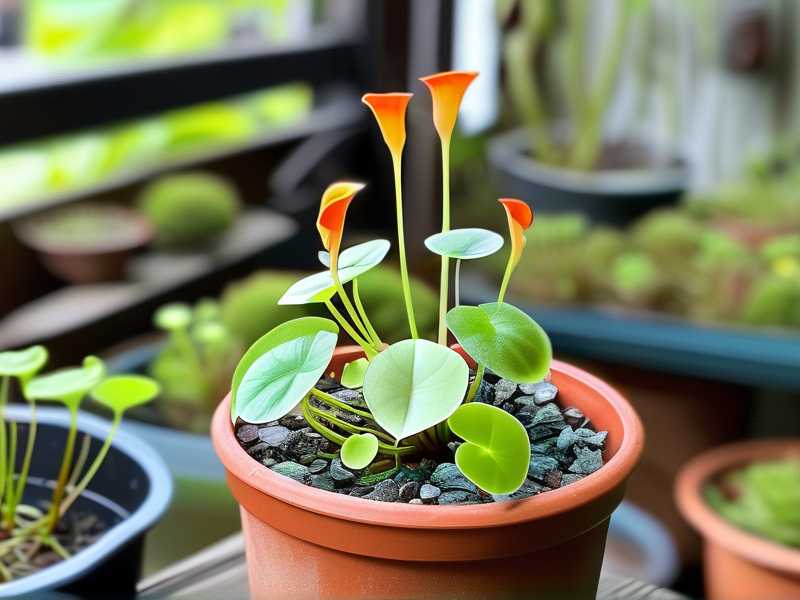
If you're here because you spotted fuzzy white or gray gunk creeping up the flower stalks of your sundew, you're not alone. I've been there, panicked, and I want to give you the short answer right away: the mold is almost always a humidity and airflow problem, not a disease your plant caught from nowhere. Fix the air around the stalk, cut back on standing water on the stalk itself, and remove the affected flower stem early. That alone solved it for me in about two weeks.
I've kept sundews for years now, mostly Drosera capensis and a few spatulata hybrids, and I've lost more flower stalks to mold than I care to admit. Learning how to stop sundew from growing mold on flower stalks honestly took me killing a couple of plants before it clicked. This isn't complicated once you understand what's actually happening.
A Quick Reality Check on Mold and Sundews
Sundews love wet, humid conditions. That's their whole thing. So do mold spores. That's the conflict.
The flower stalk is the weakest link because it's thin, it holds still air around itself, and if you mist overhead, water sits in the tiny crevices. Mold shows up fast on that surface. According to the Royal Horticultural Society (RHS), gray mold (Botrytis) thrives when there's poor air circulation combined with wet foliage and cool-to-moderate temperatures. The American Horticultural Society (AHS) says the same thing in different words: air movement is your best defense against fungal issues on houseplants and terrarium plants.
So the fix isn't "spray something." It's changing the environment.
Why Your Sundew Flower Stalk Is a Mold Magnet
Let me break down the actual reasons, because once you see them, you can't unsee them.
First, flower stalks are soft and sappy. Mold loves soft tissue.
Second, flower stalks grow upward, away from the leaves, which means they often sit in still air pockets inside a terrarium or under a dome. No breeze, no drying.
Third, if you top-water or mist from above, water clings to the stalk and the tiny flower buds. That's basically a welcome mat.
Fourth, indoor temperatures fluctuating between day and night create condensation. Condensation plus a wet stalk equals mold.
I remember one particular Drosera binata that threw up a gorgeous forked flower stalk. I was so proud of it. Within four days, the whole stalk looked like it was wearing a gray sweater. I tried wiping it off with a cotton swab. Bad idea. I spread spores everywhere and lost two nearby pots.
The 3 Beginner Mistakes That Cause This Every Time
I've made all three. You probably have too, or you're about to. Let's go through them.
Mistake 1: Overwatering (and misting the stalk)
Here's a number worth remembering: 90% of indoor plants die from overwatering. Sundews are bog plants, yes, but that doesn't mean you should drown the flower stalk. Standing water on the stalk itself is the problem, not the water in the tray.
I used to think "more water equals happier sundew." I was wrong. The leaves were fine sitting in a shallow tray. The flower stalk, though, got soggy and molded.
Fix: Water from the tray only. Never pour water over the crown or the stalk. If you mist, mist the soil surface, not the plant. Better yet, skip misting entirely and rely on the tray.
Mistake 2: Light in the Wrong Place
Mold doesn't need darkness, but it loves low light with high humidity. If your sundew is in a dim corner and you're keeping it in a sealed container, you're basically running a mold incubator.
Sundews need bright light. I run mine under a T5 fluorescent or a strong LED for 12 to 14 hours a day. When I moved my moldy capensis from a shady windowsill to a bright shelf with a small fan, the mold stopped coming back. Seriously, that was the turning point.
Fix: Give it bright, indirect-to-direct light. If the flower stalk is stretching and pale, it's not getting enough light. Weak stalks mold faster.
Mistake 3: The Wrong Pot or Container
This one is subtle. I used to grow sundews in glazed ceramic pots with no drainage and a glass dome on top. Terrible combination. The dome trapped every bit of moisture, and the pot held water like a bucket.
Fix: Use a plastic pot with drainage holes, sitting in a tray. If you use a terrarium, leave the lid cracked. Air needs to move. I now use simple 4-inch plastic pots in a tray, and I only cover them when I'm trying to germinate seeds.
My 2-Week Mold Fix: Step by Step
Here's exactly what I did when I found mold on a sundew flower stalk two months ago. I logged it because I wanted to know if it worked.
Day 1: I isolated the plant. I removed the moldy flower stalk with sterilized scissors, cutting below the visible mold. I threw the stalk in the trash, not the compost.
Day 1: I increased airflow. I placed a small USB fan on low, about two feet away, aimed just above the plant. Not directly at it, just enough to keep the air moving.
Day 1: I stopped all overhead watering and misting. Tray water only, and I lowered the water level so the top of the soil wasn't soaked.
Day 2-3: I checked twice a day. No new mold appeared on the cut site. I kept the fan running during the day and turned it off at night.
Day 4-7: I noticed new growth from the center of the plant. Healthy, green, no fuzz. I also dusted the area with a tiny bit of cinnamon on the cut stem. I know some people say cinnamon is overrated, but it's a mild antifungal and it worked for me.
Day 8-14: The plant pushed out a new flower stalk. This time, I let it grow. I kept the fan on and made sure the stalk never got wet. No mold. By day 14, the stalk was about two inches tall and clean.
That's the experiment. Two weeks, one fan, one cut, and a change in watering habits.
Long-Term Prevention That Actually Works
Once you've dealt with the immediate mold, you need to keep it from coming back.
Airflow is non-negotiable. I don't care if you're growing in a terrarium or on a windowsill. If the air is still, mold will find a way. A tiny fan costs less than a coffee. Use it.
Water the tray, not the plant. This is the single biggest change I made. My sundews sit in about half an inch of water. The flower stalks stay dry. Mold has no grip.
Don't crowd your plants. I used to pack them together because it looked lush. Now I space them so air can move between pots. It looks less "jungle" and more "healthy," and I'm fine with that.
Remove spent flowers and stalks quickly. Dead tissue is mold food. Snip it off as soon as it browns.
Skip the dome unless you're propagating. Domes are for germination and rooting cuttings. Once the plant is growing, it doesn't need a lid.
Consider a sulfur-based fungicide only as a last resort. I rarely use it. But if you've done everything else and mold keeps returning, a copper or sulfur spray labeled for houseplants can help. Follow the label. Don't spray it on open flowers.
What About the Flower Stalk Itself?
Some growers just cut the flower stalk off entirely. I get it. If you're not interested in seeds, cutting the stalk removes the mold target completely.
But I like seeing the flowers. So I keep the stalk and manage the conditions. If the stalk gets mold twice, I cut it. The plant recovers fine.
One more thing: if your sundew is already weak or dying, the flower stalk is the first thing to go. A stressed plant can't support flowers and fight mold at the same time. Cut the stalk, let the plant recover, and try again later.
Frequently Asked Questions
Will mold on the flower stalk kill my sundew?
Not usually, if you catch it early. The mold itself stays on the stalk unless you let it spread. The bigger risk is that mold indicates bad conditions that will eventually hurt the whole plant. Cut the stalk, fix the air and water, and the plant should bounce back.
Can I use hydrogen peroxide on sundew mold?
I've tried a diluted hydrogen peroxide spray, about one part 3% peroxide to four parts water. It knocked back the mold on contact, but it came back because I didn't fix the airflow. Use it as a spot treatment, not a cure. And keep it off the dew-covered leaves, because it can damage them.
Why does mold keep coming back on new flower stalks?
Because the conditions haven't changed. If the air is still, the stalk stays wet, and the temperature is moderate, mold will return every time. You have to change the environment, not just the plant. Fan, tray water, bright light. That's the trio.
Final Thoughts From Someone Who's Killed a Few Sundews
I won't pretend I've never lost a plant to mold. I have. More than one. But every loss taught me something, and now I can spot the warning signs before the fuzz takes over.
If you take one thing from this, let it be airflow. Mold is lazy. It needs still air and wet surfaces. Take those away, and your sundew flower stalks will stay clean. I've seen it work in my own collection, and I've seen it work for friends who were ready to give up on flowering sundews entirely.
You don't need fancy equipment. You need a small fan, a tray, and the discipline to keep the stalk dry. That's it. Give it two weeks, and you'll see the difference.