bluename
 How to Grow Drosera Intermedia (Spoon-Leaved Sundew): A Beginner’s Guide from a Fellow Plant Lover
I remember the first time I saw a Drosera intermedia, or the Spoon-Leaved Sundew. Its tiny, glistening spoons of dew looked almost magical, and I was instantly hooked. But my initial attempts to grow this fascinating carnivorous plant ended in disappointment—brown, crispy leaves and a general look of misery. If you’re here, you’ve probably felt that same frustration. You want to master how to grow Drosera intermedia, but the specific care requirements feel like a secret code. I’ve been there. After years of trial, error, and dedicated observation, I’ve cracked that code. This guide isn’t just theory; it’s my personal, hands-on journey to successfully cultivating this beautiful sundew, including the mistakes I made and exactly how I fixed them.
Understanding Your Spoon-Leaved Sundew: It’s All About Habitat
Before we dive into the daily care, it’s crucial to understand what we’re growing. Drosera intermedia is a temperate carnivorous plant, native to boggy, sunny wetlands across the Americas and Europe. Unlike tropical sundews, it requires a distinct winter dormancy period to thrive long-term. Getting its basic needs wrong is the fastest path to failure. The Royal Horticultural Society (RHS) emphasizes that mimicking a plant’s natural environment is the single most important factor for success, and for sundews, that means focusing on four pillars: water, light, soil, and food.
The Non-Negotiables: The Four Pillars of Sundew Success
Water: Pure Water is Not Optional This is the most common mistake, and I made it myself. Tap, bottled, or filtered water contains minerals that will slowly poison your sundew, leading to root burn and death. You must use water with very low mineral content.
- What to Use: Rainwater, distilled water, or reverse osmosis (RO) water are perfect. I collect rainwater in a barrel, but I always keep a gallon of distilled water as a backup.
- How to Water: The tray method is your best friend. Place your pot in a saucer or tray and keep it permanently filled with about 0.5 to 1 inch of pure water. Never let the tray dry out completely, especially in summer. The soil should feel constantly moist but not waterlogged.
Light: Think “Sun-Drenched Bog” Drosera intermedia is a sun worshipper. The more light it gets, the redder its leaves and the more prolific its dew production will be.
- Indoors: A south-facing windowsill is the minimum. I found my plants became leggy and produced little dew there. The solution? I invested in a simple LED grow light (with full spectrum). I placed it 6-8 inches above the plants and set a timer for 14-16 hours of light per day. The transformation within a week was incredible—compact growth and sticky, glistening leaves.
- Outdoors: If your climate permits (and you provide the correct water), a sunny spot on a patio is ideal. They can handle direct sun once acclimated.
Soil: Forget Potting Mix! Standard potting soil is fatal. Sundews require nutrient-poor, acidic, and airy media.
- The Perfect Mix: A 1:1 ratio of sphagnum peat moss and perlite or horticultural sand is the gold standard. I use peat moss with a handful of rinsed perlite. Ensure all components are free of fertilizers or additives. The International Carnivorous Plant Society (ICPS) strongly advises against using Miracle-Gro or similar enriched products.
Food: Let Them Hunt A common worry is, “What do I feed it?” Relax. If grown outdoors or in a sunny, indoor location with some airflow, they will catch tiny gnats and fruit flies on their own. Do not feed them chunks of meat or insects too large for their leaves. If you want to supplement, a single, tiny fruit fly or bloodworm (the kind used for fish food) placed on a leaf every 2-4 weeks is more than enough. Overfeeding can rot the leaf.
My Hands-On Propagation and Care Journey: A 2-Week Observation Log
One of the most rewarding aspects of growing Drosera intermedia is propagation. I decided to document a leaf-pulling propagation attempt over two weeks to show you the real, sometimes slow, process.
Week 1: Setting the Stage I selected a healthy, dewy leaf from a mature plant. Using fine-tipped tweezers, I gently pulled it from the base, ensuring a small, white bit of the leaf base (the meristematic tissue) was attached—this is crucial for success. I laid this leaf, dew-side up, on the surface of a prepared pot of moist peat/perlite mix. I then covered the pot with a clear plastic dome (a cut-up soda bottle works) to maintain 100% humidity and placed it under my grow lights.
Days 1-3: No visible change. The leaf still looked healthy and dewy. Days 4-7: I noticed the dew had receded, which made me nervous. However, the leaf itself remained green and firm. I resisted the urge to poke or water from above, simply ensuring the tray below had water. This is a common “pitfall”: over-mothering. They need consistency, not fuss.
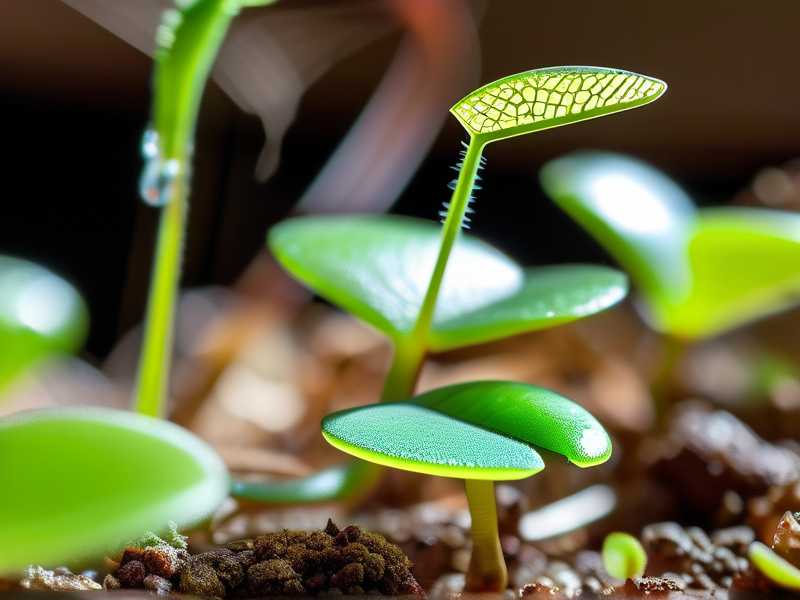
Week 2: The First Signs of Life Days 8-10: Still no dramatic changes. Patience is key in carnivorous plant propagation. Day 12: Upon very close inspection with a magnifying glass, I saw tiny, green pinpricks at the very base of the leaf where it contacted the soil! These were the first plantlets. Day 14: The pinpricks had grown into unmistakable, tiny, green sprouts, each no larger than a pinhead. Success! I continued to keep the humidity high for another week before slowly acclimating them to lower humidity by propping the dome open for increasing periods each day.
Navigating Dormancy: The Key to Long-Term Health
This is the step I ignored in my first year, and my plant never truly thrived. Drosera intermedia requires a winter dormancy period of about 3-4 months. As daylight shortens and temperatures drop, the plant will stop producing large leaves and may form a tight, hibernacular bud at its center.
- How to Provide Dormancy: If you grow it outdoors in a suitable climate, it will happen naturally. For indoor growers, you need to simulate it. In late autumn, I move my plants to an unheated but frost-free garage window where temperatures stay between 35-50°F (2-10°C). Light is reduced, and I lower the water level in the tray, just keeping the soil barely moist. The plant looks like it’s dying back—this is normal! Come spring, with increased light and warmth, it will burst back to life with vigorous growth.
Troubleshooting: The Problems I Faced and How I Solved Them
- Problem: Lack of Dew. My plant was green but not sticky. This was almost always a light issue. Moving it to stronger light under my LED fixture solved it within days.
- Problem: Mold or Fungus Gnats. This happened when I over-misted and had poor air circulation. I stopped misting, increased airflow with a small fan (not directly on the plant), and used yellow sticky traps for the gnats. For mold on soil, a light sprinkle of ground cinnamon is a natural fungicide I’ve used with success.
- Problem: Leaves Turning Black. This can be from using the wrong water, overfeeding, or a natural leaf dying off. I assessed my care: confirmed I was using distilled water, stopped any supplemental feeding, and simply snipped off the black leaf if it was old. New growth remained healthy.
Frequently Asked Questions
Can I grow Drosera intermedia in a terrarium? You can, but it’s tricky. They need very high light, which can overheat a closed terrarium, and excellent air circulation to prevent mold. An open terrarium or a simple pot on a tray is often easier for beginners. I started with a terrarium and struggled with condensation and fungus until I switched to the tray method.
How often should I repot my sundew? I repot my Drosera intermedia every 1-2 years in early spring, just as it comes out of dormancy. The peat moss breaks down over time and can become soggy. Fresh media ensures good aeration and acidity. When repotting, I handle the delicate roots as little as possible.
My plant formed a flower stalk. Should I cut it off? Flowering takes a lot of energy and can sometimes stunt leaf growth. For a young plant, I often snip the stalk early to direct energy back to the leaves. On a mature, healthy plant, I sometimes let it bloom for the beautiful white flowers and to potentially collect seed. It’s a personal choice, but if your plant seems weak, cutting the stalk is a good idea.
Growing Drosera intermedia is a deeply satisfying practice that connects you to a unique part of the natural world. It teaches patience, observation, and the importance of replicating a specific ecosystem. By focusing on pure water, intense light, the right soil, and respecting its need for winter rest, you’ll be rewarded with a captivating, dewy specimen that is not just surviving, but thriving. Start with these fundamentals, observe your plant closely, and don’t be discouraged by setbacks—each one is a lesson that brings you closer to becoming a confident sundew grower.