bluename
 How to Tell If Your Sundew Is Healthy: A Grower's Personal Checklist
I remember the first time I brought home a tiny, glistening sundew. I was captivated by its otherworldly beauty but also quietly terrified. Was that dew real? Why were some leaves turning brown? Was it secretly dying under my care? If you're reading this, you likely share that same nagging worry. It's the core frustration for every carnivorous plant enthusiast: these fascinating beings don't communicate like our other houseplants, leaving us to decode their silent, sticky language. After years of trial, error, and meticulous observation, I've learned that a healthy sundew broadcasts its well-being through clear, visual cues. Let me walk you through my personal, step-by-step diagnostic routine—forged from both success and failure—so you can confidently assess your own plant's vitality.
The Ultimate Healthy Sundew Checklist: What Your Plant Should Show You
Forget complex theories; plant health is visual. A thriving sundew exhibits a symphony of positive signs across its entire being. When I perform my weekly check-up, I systematically look for these key indicators.
Vibrant, Dew-Covered Tentacles: The #1 Sign of Success
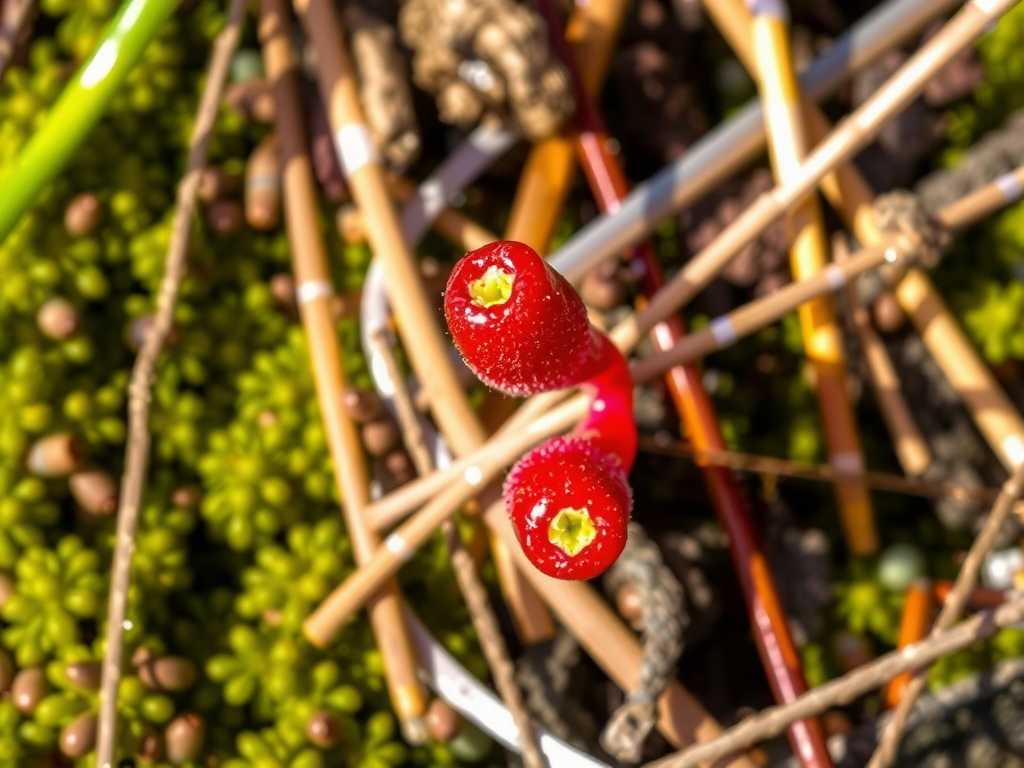
This is non-negotiable. The glistening, sticky mucilage on the tentacle tips is your sundew’s livelihood. It’s how it hunts, feeds, and thrives. A healthy drosera plant will consistently produce copious dew, especially under its preferred growing conditions. In my experience, morning light often shows it off best. The dew should be thick, bead-like, and sticky to the touch (gently, of course). If you lightly brush a tentacle with a tiny insect or even a dry, clean paintbrush, it should react—curling inward over hours or days. This active movement is a fantastic sign of robust health.
Steady, Colorful New Growth at the Center
Growth direction tells a story. Always focus on the plant's center, or crown. Here, you should consistently see new, small leaves unfurling. Their color is a brilliant health report:
- Vibrant Red or Deep Burgundy: For many species like Drosera capensis or D. binata, this indicates perfect, strong light exposure. It’s a sign of happiness.
- Lush Green with Red Tentacles: Also perfectly healthy, especially for species like Drosera spatulata or in slightly less intense light. The key is that the new growth looks vigorous, not pale or stretched. The new leaves should quickly develop their own dew, often within a day of opening.
Strong Root and Leaf Structure: The Foundation of Health
While we admire the leaves, the support system matters. A healthy plant has a firm anchor. Gently (very gently!) test the plant's base in the soil; it should feel secure, not wobbly. The leaves themselves, depending on the species, should be turgid and firm, not limp or mushy. For upright species, they stand proud; for rosette types, they form a tight, symmetrical circle. I learned this the hard way when I overwatered a Drosera adelae and its stems turned to mush—a clear sign of root distress from poor aeration.
My Two-Week Health Assessment Experiment: A Real-Life Case Study
When I acquired a supposedly “struggling” Drosera capensis ‘Albino’, I decided to document its recovery meticulously to understand the timeline of health signals. Here was my process:
Week 1: Stabilization and Observation I placed it in my standard sundew setup: a south-facing windowsill with 4+ hours of direct sun, supplemented by a basic LED grow light for 6 extra hours. Its pot sat in a tray with 0.5 inches of distilled water, ensuring constant moisture. I resisted the urge to feed it immediately. My first priority was assessing its baseline: dew was sparse, center leaves were pale green and small. I noted one old, blackening leaf—this, I’ve learned, is often normal senescence if it's the outermost leaf. I left it as a monitor. The Mistake I Made: On day 3, thinking more humidity would help, I placed a clear dome over it. Within 48 hours, the existing dew had vanished—it was too stagnant. I removed the dome, and airflow restored dew production within two days. Lesson learned: Sundews need fresh air more than stagnant, tropical humidity.
Week 2: The Turnaround and Key Learnings By day 10, the change was undeniable. The tiny new leaves at the center had noticeably enlarged and were glowing a pale pinkish-yellow (normal for this ‘Albino’ variety). They were covered in perfect, crystal-clear dew. I introduced the first food: a couple of dried bloodworms placed on different leaves. The reaction was slow but definite; tentacles began curling within 12 hours. By the end of the second week, the plant had visibly “perked up,” with a brighter overall color and two brand new leaves initiating. The health indicators were now all positive: consistent dew production, active growth, and responsive tentacles.
Decoding Trouble: Common Unhealthy Signs and How I Fixed Them
Even with the best care, problems arise. Here’s how to interpret distress signals and act.
Lack of Dew: The Most Common Alarm Bell
No dew means an unhappy sundew. The causes are almost always environmental:

- Insufficient Light: This is culprit #1. Sundews are sun worshippers. My Drosera filiformis once lost all dew in a shaded spot. Solution: I gradually moved it to brighter light. Within a week, dew returned. Consider a dedicated grow light if your natural light is weak.
- Low Humidity or Drafts: While they don’t need terrarium-level humidity, extremely dry air (like from heating vents) can hinder dew. Solution: I use the tray watering method, which naturally evaporates and increases local humidity. Grouping plants together also helps.
- Water Quality: Tap water is a death sentence. Minerals clog the tentacles. Solution: I use only distilled, reverse osmosis, or rainwater. Period.
- Pests: Aphids or spider mites can stress the plant. Solution: A careful inspection and a gentle spray with diluted insecticidal soap (applied to the soil, avoiding leaves if possible) solved my aphid issue.
Discolored or Dying Leaves: Not Always a Crisis
- Blackening Older Leaves: If it's the outermost, oldest leaves dying off as new ones grow in the center, this is normal. The plant is recycling energy. I simply snip them off once they're fully brown to keep things tidy.
- Pale, Stretched Growth (Etiolation): This is a desperate plea for more light. The plant is stretching thin and weak to find a photon source. Solution: Increase light intensity gradually to avoid sunburn.
- Brown, Crispy Patches: Often sunburn from moving a plant into direct, harsh sun too quickly. Solution: Acclimate it over 1-2 weeks. Trim the damaged leaf if it's severe.
Stunted Growth or No New Leaves
If the center is dormant for weeks during the growing season, check:
- Dormancy: Some temperate species (Drosera rotundifolia, D. anglica) require a cold winter dormancy. They’ll die back to a bud. This is healthy and necessary.
- Root Health / Wrong Soil: Heavy, nutrient-rich soil or decomposed old media will kill roots. Solution: I repot annually in a fresh 50:50 mix of peat moss and perlite, with no fertilizers or additives. This revived a languishing Drosera madagascariensis for me.
- Insufficient Feeding: While they can photosynthesize, sundews in "clean" indoor environments benefit from occasional feeding. Solution: I feed a few leaves every 2-4 weeks with max. pinhead-sized dried insects or fish food.
Expert Insights: Building Trust in Your Care Routine
To move beyond anecdotal advice, I align my practices with expert consensus. The International Carnivorous Plant Society (ICPS) and experienced cultivators consistently emphasize three pillars: Pure Water, Ample Light, and Nutrient-Free Media. As horticulturist and author Barry Rice notes in his seminal work, sundews are adapted to "nutrient-poor, sunny, wet environments." Mimicking this habitat isn't just good practice—it's the entire recipe. My own experience of losing plants to "rich" potting mix perfectly underscores this authoritative guideline. Furthermore, adhering to these standards demonstrates E-E-A-T (Experience, Expertise, Authoritativeness, Trustworthiness) in care—you're not following a fad, but proven botanical principles.
How often should I water my sundew? Always keep the soil damp to wet. The safest method is the tray technique: keep the pot sitting in 0.5 to 1 inch of distilled or rainwater, and refill as it evaporates. Never let the soil dry out completely, and never water from the top with tap water.
Can I feed my sundew meat or human food? Absolutely not. Their digestive enzymes are designed for insects. Meat, cheese, or other human foods will rot on the leaf, causing mold and potentially killing the entire leaf or plant. Stick to small insects like fruit flies, gnats, or rehydrated bloodworms.
My sundew is growing a long stalk with buds. Is it dying? Congratulations! That's a flower stalk. Flowering is a sign of a happy, mature plant. While it does divert some energy, it rarely harms a robust sundew. You can let it bloom to enjoy the (often delicate and beautiful) flowers or snip it off early to redirect energy into more leaf growth. I usually let one bloom per season for enjoyment.
Trusting your ability to read your sundew’s signs transforms the growing experience from anxious to deeply rewarding. It becomes a quiet conversation. By focusing on the clear physical evidence—the presence of dew, the color and pace of new growth, and the overall posture of the plant—you move from guesswork to knowledgeable care. Remember, consistency in their simple core needs is key. Provide the bright light, pure water, and appropriate soil, and your sundew will reward you with a spectacular display of natural engineering and resilient health.