bluename
 How to Grow Drosera Spatulata (Spatulate Sundew): A Beginner's Guide to a Sticky Success Story
I remember the first time I saw a Drosera spatulata. It was a tiny, star-shaped rosette glistening with dewdrops under a nursery light. I was captivated, but also intimidated. Like many new carnivorous plant enthusiasts, I brought it home filled with excitement, only to watch it slowly decline. The leaves lost their sticky dew, the vibrant reds faded, and I was left with a sad, greenish blob. My mistake? Treating it like a regular houseplant. If you're here, you've likely faced similar frustrations. The dream of a thriving, insect-catching sundew feels out of reach, sabotaged by confusing care advice. I’m here to tell you it doesn’t have to be that way. After years of trial, error, and finally, consistent success, I’ve distilled everything into this clear, step-by-step guide. I’ll walk you through the exact process I use, including the real-time results from a two-week rescue mission I performed on a struggling plant.
Understanding Your Spatulate Sundew: More Than Just a Pretty Face
Before we dive into the how, let's understand the why. Drosera spatulata is often hailed as one of the easiest carnivorous plants for beginners, and for good reason. It's adaptable, forgiving, and propagates readily. However, "easy" is relative. It thrives under specific conditions that mimic its natural habitat: nutrient-poor, soggy, and sunny environments like Australian or Southeast Asian wetlands. Getting these fundamentals wrong is the root of most failures. The Royal Horticultural Society (RHS) emphasizes that success with carnivorous plants hinges on replicating these acidic, low-nutrient conditions, warning that standard potting mixes and fertilizers are a death sentence.
My Essential Setup: The Non-Negotiables
Here’s the toolkit I’ve assembled through experience. Skipping these is the first pitfall I urge you to avoid.
Light: The Dew Maker Light is not just important; it’s the engine behind that iconic sticky dew. Insufficient light leads to weak, green growth with little to no mucilage. I provide my Drosera spatulata with very bright, direct light for at least 6-8 hours daily.
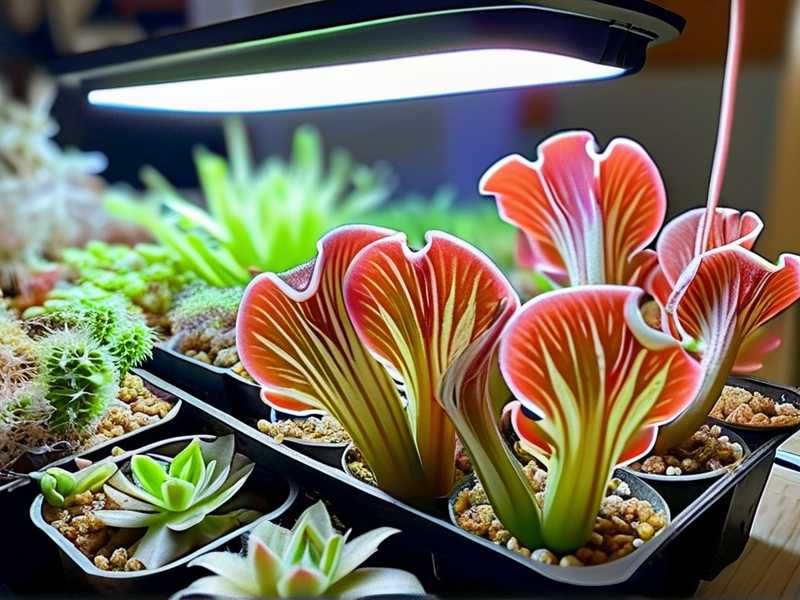
- My Setup: I use a full-spectrum LED grow light positioned 6-8 inches above the plants, on for 14 hours a day. A sunny south-facing windowsill can work, but results are often seasonally dependent.
- The Two-Week Observation: For my recent rescue plant, which arrived etiolated and nearly dew-less, I placed it directly under my LED panel. Within 7 days, the center of the rosette began producing tiny, sticky tentacles. By day 14, the entire plant had transformed from pale green to a deep red-burgundy and was covered in glistening droplets. The difference was dramatic and proved light was the primary issue.
Water: Pure and Simple Tap water is your sundew’s worst enemy. The minerals and chemicals (like chlorine) will quickly build up in the soil, burning roots and preventing proper function.
- My Routine: I use only distilled water, reverse osmosis (RO) water, or rainwater. I keep the plant in a tray or saucer where I maintain 0.5 to 1 inch of water at all times during the growing season. This mimics the perpetually damp bogs they love. The tray method is foolproof.
- The Pitfall I Hit: Early on, I used filtered drinking water, thinking it was safe. Within a month, my plants developed brown leaf tips and stunted growth. The solution was a complete flush with distilled water and repotting into fresh medium. Now, I keep a dedicated jug of distilled water just for my carnivorous plants.
Soil: The Foundation of Health Never, ever use standard potting soil, compost, or fertilizer. Drosera spatulata requires an acidic, airy, and nutrient-free medium.
- My Mix: I swear by a simple 1:1 ratio of sphagnum peat moss and perlite. I always rinse the perlite with distilled water first to remove dust. Some growers use pure long-fiber sphagnum moss with great success, especially for maintaining higher humidity.
- Expert Backing: The Australasian Carnivorous Plant Society (ACPS) consistently recommends these inert, acidic mixes, noting that the sphagnum peat moss helps maintain the low pH (around 4.0-6.0) that sundew roots require for nutrient uptake.
Feeding: A Delicate Balance A common question is, "Do I need to feed it?" The answer is yes, but carefully. They get energy from light, but they get vital nutrients from prey. If grown indoors, they might not catch enough on their own.
- My Method: I feed my indoor sundews once every 2-4 weeks during active growth. I use rehydrated bloodworms (fish food) or a tiny piece of a freeze-dried insect. I place it on a single leaf and gently massage it to mimic struggling prey. The leaf will curl around it in hours.
- The Two-Week Test: For my recovering plant, I fed one strong leaf a bloodworm at the start of week two. The leaf enveloped it completely within 8 hours and digested it over 3 days. This targeted nutrient boost coincided with a surge in new, healthy growth from the center.
Step-by-Step: My Planting and Daily Care Ritual
Let’s put it all together. Here is my exact process for potting and maintaining a thriving colony.
- Potting: I choose a plastic pot with drainage holes (4-5 inches is ample) and a deep saucer. I moisten my peat/perlite mix with distilled water until it’s damp but not dripping. I fill the pot, make a small hole, and gently settle the plant in, ensuring its crown (the white base where leaves emerge) is right at the soil surface. No burying!
- Initial Watering: I water thoroughly from the top with distilled water until it runs freely from the drainage holes into the saucer. I then keep that saucer filled.
- Placement: I place it immediately under my grow light or in its permanent sunny window. No "acclimation" period is needed for light—they crave it from day one.
- Ongoing Maintenance: I check the water tray every other day. I remove any dead leaves that accumulate (they can invite mold). I observe the dew. Plump, glistening droplets mean the plant is happy. If dew shrinks or disappears, I immediately troubleshoot light or water quality first.
Propagation: Sharing the Wealth
One of the joys of Drosera spatulata is how easily it multiplies. My favorite method is leaf pullings.
- My Process: I select a healthy, dewy leaf and gently pull it from the stem, trying to get a bit of the white base. I lay this leaf on the surface of damp sphagnum moss, press it lightly, and cover the container with a clear lid to keep humidity high. I place it under bright light.
- The Two-Week Propagation Watch: I started three leaf pullings alongside my rescue project. By the end of the first week, tiny green dots appeared at the base of the leaf. By day 14, each had sprouted several miniature, fully formed sundew plantlets. It’s incredibly rewarding and a sure sign your mother plant is healthy.
Troubleshooting: The Problems I’ve Faced and Fixed
Problem: Lack of Dew. This was my biggest headache. The cause is almost always inadequate light or incorrect water. My fix was a two-pronged approach: I moved the plant to a stronger light source and ensured it was only ever watered with distilled water. Humidity can be a secondary factor; a cloche or terrarium can help in very dry homes, but light is primary.
Problem: Fungus Gnats or Mold. Overly soggy media with poor air circulation can cause this. I solved it by allowing the water tray to dry out just for a day to let the surface breathe, increasing airflow with a small fan, and carefully removing any moldy material. For gnats, I use sticky traps. The sundews themselves will help control the adults!
Problem: Dormancy Confusion. Drosera spatulata is subtropical and doesn’t have a strict winter dormancy like some sundews. However, growth may slow in lower light and cooler temperatures. I keep mine under grow lights year-round, so they grow continuously. If yours slows in winter, simply reduce the water level slightly but never let it dry out completely.
Will fertilizing help my sundew grow faster? No, and it will likely kill it. Their roots are not adapted to absorb nutrients from the soil. All nutrition must come from captured insects or the occasional, careful foliar feeding with an extremely diluted orchid fertilizer (I use 1/4 strength, applied to the leaves only, once a season). When in doubt, don't fertilize.
Can I grow Drosera spatulata outdoors? Absolutely, and they often thrive! In temperate climates, they do wonderfully in a sunny, boggy spot during the frost-free months. Ensure they are in a consistently wet location and protect them from hard freezes. They make excellent additions to a mini-bog garden.
My plant is flowering. Should I cut the flower stalk? Flowering takes energy. For a young or recovering plant, like my two-week rescue, I do cut the stalk to redirect energy back to leaf and root growth. For a mature, robust plant, I let it flower. The flowers are charming, self-pollinate easily, and will produce abundant seeds you can sow for dozens of new plants.
Growing Drosera spatulata is a journey of paying attention to a few simple, critical rules. It’s about embracing the unique needs of a plant that thrives on sunshine, pure water, and poor soil. The reward is a dazzling, living gem that actively participates in its own care by catching its own food. Start with the fundamentals I’ve outlined—the right light, the right water, the right soil—and you’ll move from struggling keeper to confident cultivator. Your windowsill will soon be glowing with sticky, satisfied sundews.